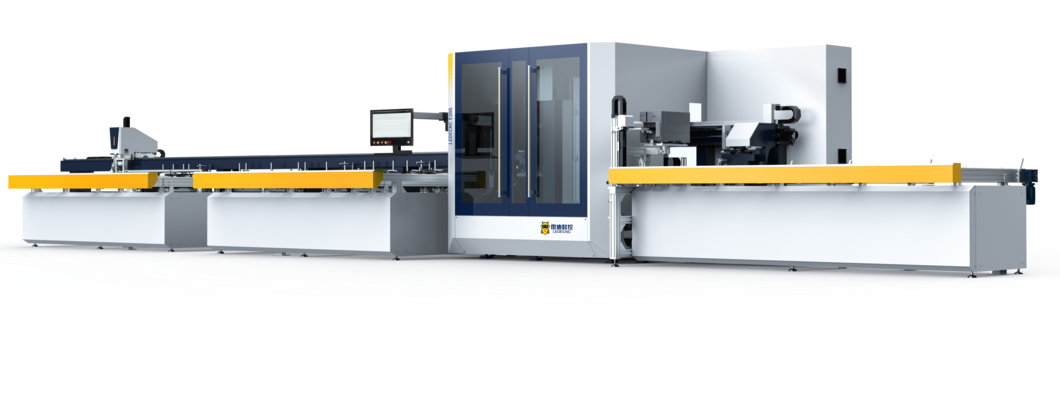













You are comparing aluminum window and door machine manufacturers, and every brochure claims the same things: high precision, stable performance, full service. The problem is that most of these companies do not actually build the same kind of equipment. One manufacturer specialises in double-head saws, another in 5-axis machining centres, a third in complete automated lines. Comparing them on brand reputation alone tells you almost nothing about which one fits your factory.
This guide lists ten manufacturers that build profile processing equipment for aluminum windows and doors, and compares them by what they actually produce: cutting systems, machining centres, end milling, corner crimping, and full production lines. It is written for buyers specifying a new workshop or replacing individual stations, not for readers comparing brand prestige. The order reflects documented equipment coverage, not advertising budgets or company size. If you want the product side first, the aluminum door and window machine range shows how these machine types are grouped in practice.
If you already know which process you are buying for, skip to Matching Machines to Your Production Process. If you are still defining the scope, read the selection criteria first — the machine type you choose determines your capacity ceiling for the next decade.
What Counts as an Aluminum Window and Door Machine?
"Aluminum window machine" is a category label, not a product. A factory producing casement windows and a factory producing unitized curtain wall panels need different equipment combinations. Before comparing manufacturers, it helps to separate the process into stages, because most manufacturers are strong in two or three of them rather than all five.
- Cutting. Double-head cutting saws, single-head saws with arbitrary angle capability, and CNC cutting centres. This stage sets the upper limit of daily output.
- Machining. 3-axis, 4-axis, and 5-axis machining centres performing milling, drilling, tapping, and slot opening on profiles.
- End milling. Dedicated end milling machines that prepare profile ends for corner joints. Often underestimated, but it directly affects joint strength and squareness.
- Corner crimping and assembly. Crimping presses, corner cleaning, and assembly benches.
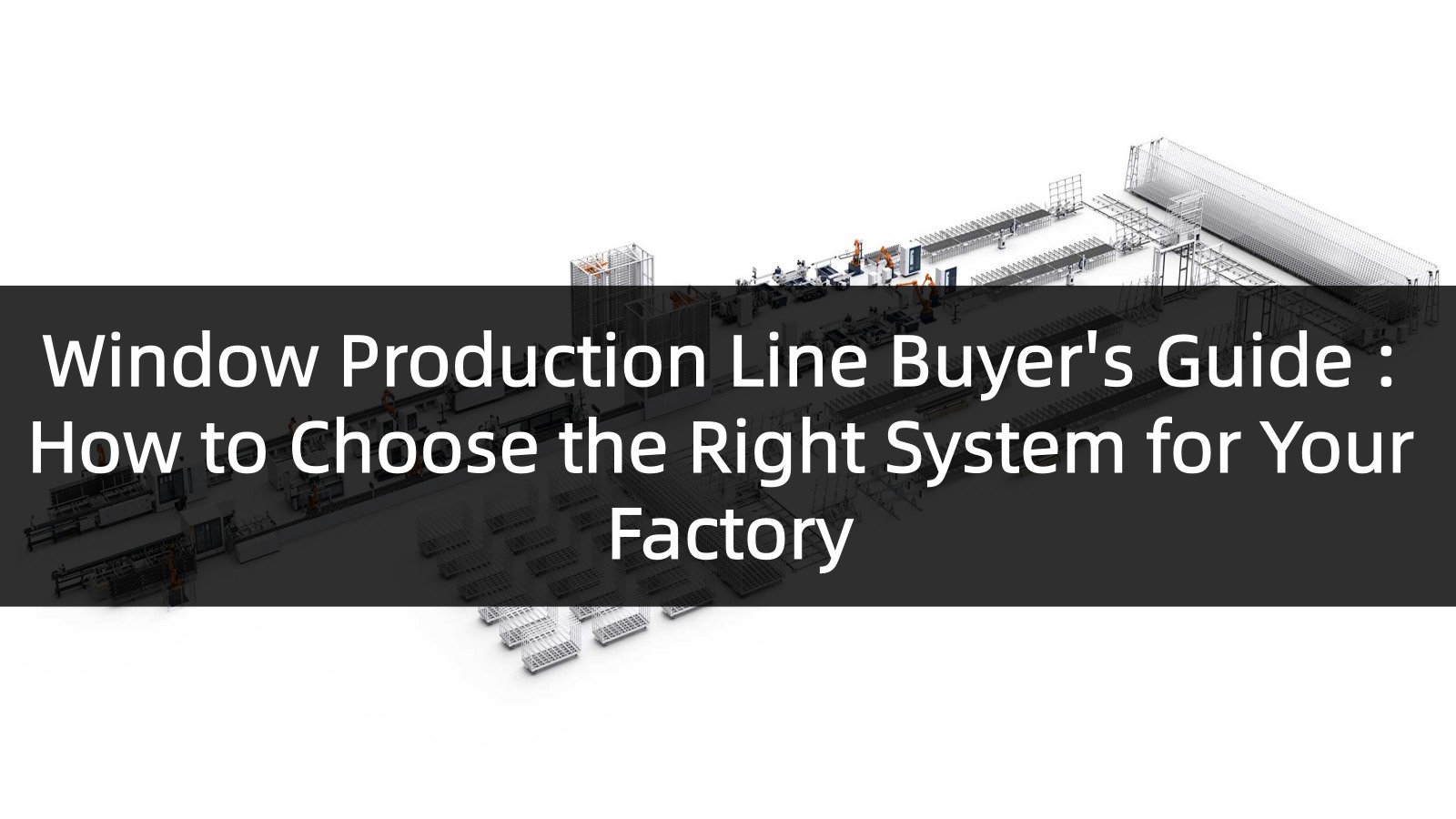
- Integration. Conveyors, transfer systems, and full automated production lines that link the stages above.
A manufacturer that lists all five stages in its portfolio is not automatically better than a specialist. It does mean, however, that you can source a consistent equipment family from one supplier — which matters for software compatibility, spare parts, and service response.
How We Selected These Manufacturers
The ten companies below were shortlisted using five criteria:
- Manufacturer status. The company designs and builds profile processing equipment. Trading companies and pure system houses were excluded, even where they are well known in the window industry.
- Aluminum relevance. The portfolio must address aluminum profile processing. Manufacturers whose product lines are primarily oriented to PVC were not included, since the tooling, clamping, and cutting parameters differ.
- Identifiable series and models. Published product families that a buyer can look up, request specifications for, and compare. Companies with only generic catalogue pages were not included.
- Coverage across process stages. Preference was given to manufacturers covering at least cutting plus one of machining, end milling, or crimping.
- Service and export capability. An established sales and support structure outside the home market, which matters if your factory is not in Europe or Turkey.
Every series name and model in the sections below was checked against the manufacturer own product pages at the time of writing. Where a manufacturer publishes only generic catalogue pages, the entry describes its range without quoting model numbers; JMD Machinery is listed on that basis. This is a buyer-oriented shortlist, not a ranking based on verified market share. Specifications, option packages and configurations vary by market, so confirm the exact model and scope with each supplier before comparing prices.
Top 10 Aluminum Window and Door Machine Manufacturers
1. Elumatec

Headquarters: Germany (part of the Voilàp Group) | Representative Series: SBZ machining centres, DG double-head saws, MGS single-head saws, KF end milling machines
Overview: Elumatec builds machines and systems for aluminum, PVC, and steel window, door, and facade production. Its portfolio spans single machines through to automated lines, supported by the company's own software division.
Key Strengths: The SBZ range covers machining centres from compact models up to long-bed 5-axis machines for oversized profiles. The DG family handles double-head cutting in several blade diameters, while the MGS range covers single-head sawing. Elumatec also supplies end milling machines (KF), copy routers, and crimping equipment, so a factory can standardise on one supplier across most of the process. In-house software and a broad spare-parts organisation support long service life.
Best For: Factories targeting high-precision architectural work, curtain wall, or export markets where documented machine performance and long-term parts availability are decisive. The main trade-off is acquisition cost and delivery lead time compared with Turkish and Chinese alternatives.
2. Emmegi

Headquarters: Italy, founded 1970 | Representative Series: Satellite XTE and XLE, Comet and Phantomatic machining centres, Precision double-head saws
Overview: Emmegi designs and manufactures CNC machining centres and cutting systems for aluminum, PVC, and steel profiles, with a product architecture built around modular machining platforms.
Key Strengths: Few manufacturers offer as many machining centre variants. The Satellite XTE and XLE are gantry-style 5-axis machines for long profiles, while the Comet and Phantomatic families cover 3-axis and 4-axis work in several working lengths and enclosure configurations. Cutting is handled by the Precision double-head series and a wide single-head range. Emmegi also builds the ITACA corner crimping machine and LILLIPUT end milling range, and develops its own CAD/CAM software, which simplifies data flow from design to machine.
Best For: Factories with a mixed order book — standard windows, structural profiles, and curtain wall — that need to match machine configuration to each product family rather than buy one universal centre.
3. FOM Industrie

Headquarters: Italy | Representative Series: LT 500, LT 600, LT 650 cutting systems; LMT 650 and LMX 650 machining centres
Overview: FOM Industrie manufactures aluminum working machinery for window, door, and facade fabrication, positioning its range around production-oriented cutting and machining platforms.
Key Strengths: The LT series covers cutting platforms in different working lengths, while the LMT and LMX platforms add CNC machining capability for milling, drilling, and end operations. FOM structures its offer around complete configurations rather than isolated machines, which helps when a factory is planning a staged expansion — one line now, additional stations later — without changing control logic. The company's product documentation is organised by production requirement, making specification comparison relatively straightforward.
Best For: Medium and large fabricators buying a coordinated cutting and machining setup, particularly where a phased expansion is planned and machine-to-machine consistency matters.
4. Pertici

Headquarters: Italy (Certaldo), founded 1965 | Representative Series: P527 and P529 machining centres, P104, 600TSE and 550TSE double-head saws, SC cutting centres
Overview: Pertici Industries designs and manufactures aluminum and PVC processing machinery. Its machining centre range is built around 4-axis and 5-axis platforms offered in several working lengths; confirm the exact working length for the model you are quoted, since it is not uniform across the range.
Key Strengths: The P527 and P529 are offered in Essential, Premium, and Premium Plus configurations, so a buyer can step up in spindle power, tool magazine capacity, and automation without changing platform. Machines are supplied with 3D CAD-CAM software and are designed for connection to third-party production systems. The cutting range covers double-head saws, cutting centres, and end milling machines in one coherent family. Pertici also customises machine configuration for specific production requirements, which is useful for non-standard profile systems.
Best For: Small and mid-sized fabricators who want European-built machining capability at a lower entry point than the largest Italian and German platforms, and who value configuration flexibility over the widest possible catalogue.
5. Haffner

Headquarters: Istanbul, Türkiye (brand founded in Pforzheim, Germany, in 1926) | Representative Series: AL-230 and MAC-440 machining centres, TT and TA saw ranges, FU end milling machines, HP-114 crimping
Overview: Founded in Pforzheim, Germany, in 1926, Haffner was acquired by Murat Machinery in 2012 and moved production to Istanbul, where it runs a 25,000 m² plant and exports to about 100 countries. It builds manual and automatic profile processing machines for aluminum, PVC and steel.
Key Strengths: The portfolio is unusually complete for a single supplier: profile machining centres (AL and MAC series), double-head and single-head saws (TT and TA ranges), copy routers, end milling machines, and corner crimping presses. This lets a factory build an entire workshop from one source with consistent controls, documentation, and spare parts. Ask which entity manufactures the quoted model and where spare parts are stocked; Haffner runs its own offices in the USA, Canada, Germany, India, Chile, Poland and Russia.
Best For: Fabricators who want a wide machine range from one supplier and are comparing European and Turkish quotations against the same specification. Ask for delivery lead time, control platform and spare-parts terms in writing rather than assuming either region is faster or cheaper.
6. Yilmaz Machine

Headquarters: Türkiye | Representative Series: AIM machining centres; cutting, milling, corner crimping, end milling, and pressing ranges
Overview: Yilmaz Machine manufactures profile processing machinery for both aluminum and PVC, organised into parallel product families by process stage.
Key Strengths: The aluminum side of the catalogue covers processing centres, cutting machines, milling units, corner crimping presses, end milling, and material handling including transfer and swarf extraction systems. Because the same company also builds the PVC equivalents, its aluminum range reflects production logic learned across both material types — useful if your factory runs both lines. Handling and extraction equipment being available from the same supplier reduces the coordination work in a workshop layout project.
Best For: Fabricators that run aluminum and PVC under one roof, or that want a single supplier for machines plus the surrounding handling and extraction infrastructure.
7. Oz Machine (Özçelik)

Headquarters: Türkiye (Istanbul) | Representative Series: GARNET and GARNET MAXI machining centres, ALCOR-V, LEPUS-X, APEX-II corner crimping
Overview: Oz Machine, trading as Özçelik, has been building door and window fabrication machinery since the 1980s. Its product structure is organised around the operations a window factory performs rather than around machine categories.
Key Strengths: The GARNET is a 4-axis CNC profile machining centre with a spindle that indexes between -90° and +90°, handling milling, drainage channel opening, punching, marking, and end milling in one setup. The GARNET XS4 consolidates several of these operations, and the GARNET MAXI covers shorter profiles on a servo-rotating table. The ALCOR-V combines cutting, surface treatment, and end milling for wide profiles. Corner crimping is covered by APEX-II, and the company also builds corner welding and cleaning equipment for PVC. This operation-first logic makes the range easy to map onto an existing workshop layout.
Best For: Fabricators who want a machining centre that consolidates several manual operations, and who value a supplier whose catalogue is organised by workshop process rather than by machine type.
8. Kaban Makina

Headquarters: Türkiye (Istanbul) | Representative Series: AC 2045, AC 2050, AC 2055 double-head saws; ZC 3052 and ZC 4040 machining centres; ZE 2010 facade milling
Overview: Kaban Makina builds aluminum and PVC profile processing machinery, with a particularly detailed cutting range and a growing CNC machining centre line.
Key Strengths: The cutting portfolio is the strongest part of the offer: full-automatic and servo-controlled double-head saws (AC 2045, AC 2050, AC 2055), single-head machines, dedicated connector cutting and drilling machines, and the ZE 2010 facade milling machine for curtain wall profiles. On the machining side, the ZC series covers 3-axis and 5-axis centres with working lengths suited to standard window profiles. End milling machines, copy routers, and crimping presses complete the range. For a factory whose bottleneck is cutting throughput, this is a supplier worth comparing directly against European saw platforms.
Best For: Production lines where cutting capacity is the constraint, and curtain wall fabricators who need facade profile milling alongside standard window cutting.
9. LEADCNC

Headquarters: China (Jinan) | Representative Series: SU100, SU200 and SU600 intelligent production lines; S100 and S200 laser-equipped cutting and milling machining centres; Emerald T140A, T300, F260 and F550 machining centres; Ruby 550D and Ruby 600 cutting saws
Overview: LEADCNC manufactures aluminum door and window processing equipment and automated production lines, supplying fabricators in more than seventy countries.
Key Strengths: The differentiator is integration rather than individual machines. The intelligent aluminum door and window production line links cutting, machining, and transfer stations with material handling, aimed at factories replacing manual transfer between stations. On the machine side, the Emerald machining centre range covers 3-axis, 4-axis, and 5-axis configurations for profile milling, drilling, and tapping. Cutting is covered by the Ruby 550D double-head saw and the Ruby 600 arbitrary-angle single-head saw, with laser-equipped cutting and milling machining centres in the S series. The company also builds crimping and end milling equipment, so a complete workshop can be specified from one source.
Best For: New factories and expanding fabricators who need a complete line commissioned as a system rather than assembled from separate machines, and who prioritise automation level and total investment over brand heritage. Buyers should verify local service coverage and spare-parts lead time for their region before committing.
10. JMD Machinery

Headquarters: China (Shandong) | Representative Range: Aluminum window machines, aluminum profile cutting machinery, door and window production lines
Overview: JMD Machinery manufactures aluminum window machines and profile processing equipment, with a catalogue oriented around complete window production rather than individual machine categories.
Key Strengths: The product structure covers window making machines, profile cutting machinery, and door and window production lines, which suits buyers assembling a workshop around a defined product rather than matching individual stations. As with other Chinese manufacturers at this level, the commercial appeal is equipment cost and configuration flexibility — specifications can usually be adjusted to the target capacity and budget, and lines can be quoted as a package including handling.
Best For: Entry and mid-level fabricators comparing complete window production configurations at a defined budget. Request detailed component and control specifications, and confirm service arrangements in your country, since documentation depth varies between Chinese suppliers.
Aluminum Window and Door Machine Manufacturers Comparison
| Manufacturer | Country | Representative Series | Widest Coverage | Ask Before Ordering |
|---|---|---|---|---|
| Elumatec | Germany | SBZ, DG, MGS, KF | Machining centres and saws, full range | Which SBZ model and working length the offer is based on, and whether software is licensed per seat or per machine |
| Emmegi | Italy | Satellite, Comet, Phantomatic, Precision | Machining centre variants | Which machining centre family and axis configuration is quoted, and what tooling is included |
| FOM Industrie | Italy | LT, LMT, LMX | Coordinated cutting and machining | Whether cutting and machining are quoted as one coordinated package or as separate stations |
| Pertici | Italy | P527, P529, P104, 600TSE | Configurable machining centres | The actual working length of the quoted platform, and which operations the base price covers |
| Haffner | Germany / Türkiye | AL, MAC, TT, TA, FU | Complete workshop from one source | Which legal entity manufactures the quoted model, and where spare parts are stocked |
| Yilmaz Machine | Türkiye | AIM and process-based ranges | Machines plus handling and extraction | Which process steps the quoted range actually covers, and whether handling and extraction are included |
| Oz Machine | Türkiye | GARNET, ALCOR-V, APEX-II | Multi-operation machining centres | Which operations the quoted GARNET model consolidates, and which still need separate stations |
| Kaban Makina | Türkiye | AC, ZC, ZE | Cutting and facade milling | Profile capacity of the quoted saw, and whether facade milling requires a separate machine |
| LEADCNC | China | SU, S, Emerald, Ruby | Automated line integration | Line configuration, automation level, and exactly which stations the quoted scope includes |
| JMD Machinery | China | Window machines and production lines | Package production configurations | Which models are quoted, with full specifications and a component list in writing |
Note: Series names, working lengths, and available configurations vary by model and region. Confirm current specifications directly with each manufacturer before comparing quotations.
Matching Machines to Your Production Process
Most buying mistakes happen before the quotation stage: a factory buys a capable machining centre while its actual bottleneck is cutting, or invests in automation before the process is stable. Work through the stages in order.
1. Start with cutting capacity
Cutting determines how many units can enter the pipeline. A double-head saw with servo-controlled positioning and a CNC cutting centre differ substantially in changeover time, not just in cutting speed. If you produce many variants in small batches, changeover time matters more than raw throughput. If you produce a narrow range at volume, the opposite is true.
2. Decide whether you need a machining centre or dedicated stations
A 3-axis or 4-axis machining centre replaces several single-purpose machines and reduces handling between operations. Whether it pays back depends less on how many profile variants you run than on four measurable factors: changeovers per shift, number of operations performed on the same profile, labour cost per station, and machine utilisation. A factory that changes over several times a shift, or performs four or more operations on one profile, usually gains more than a factory running a single product family at high volume with dedicated stations.
3. Do not skip end milling
End milling prepares profile ends for the corner joint. Insufficient or inaccurate end milling shows up later as poor corner strength and visible gaps — a defect that cannot be corrected downstream. If corner quality is a recurring complaint, examine this stage before replacing the crimping press.
4. Match corner crimping to profile system
Crimping presses are profile-specific. Confirm the crimping blade sets and pressure range match the profile systems you actually use, and check whether custom blade sets are available for profiles you plan to add.
5. Consider automation only after the process is stable
An automated line amplifies whatever the process already does. If manual stations still produce inconsistent output, automating transfer between them will not fix the cause. Automate when the sequence, tolerances, and takt time are already predictable — at that point a linked line reduces handling, labour dependence, and work-in-progress.
How to Choose an Aluminum Window and Door Machine Manufacturer
1. Define the profile range before the machine
Collect the actual profile cross-sections you process or plan to process, including wall thickness and the widest and tallest sections. Working length and clamping range are the two specifications most often found to be insufficient after delivery.
2. Calculate capacity backwards from orders
Convert your target output into cutting cycles, machining time per unit, and changeover frequency. A machine that is fast in a demonstration but slow to reset can underperform a slower machine on a high-variety order book.
3. Ask for the control and software architecture
Confirm which CNC control is used, whether the manufacturer supplies its own CAD/CAM software, and whether the machine accepts files from your existing design workflow. Software that cannot read your file formats becomes a manual data-entry cost every day.
4. Verify service depth in your country
Ask for the name of the nearest service engineer, typical response time, and the spare-parts lead time for commonly replaced components. For imported equipment, a long parts wait can erase the price advantage between two suppliers, so quantify the exposure per part category before you decide.
5. Compare total cost, not purchase price
Include tooling, fixtures, installation, training, maintenance, energy consumption, and expected consumable life. Request quotations based on identical profiles, operations, and delivery terms, otherwise the comparison is not meaningful.
6. Request a trial on your own profile
Send sample profiles and a drawing of a representative component. A manufacturer confident in its equipment will run the sample and return measured results. This single step filters out more unsuitable suppliers than any catalogue comparison.
What to Compare Whatever the Machine Origin
Country of manufacture is a weak predictor of fit. Two machines built in the same country can differ more than two machines built on different continents, because configuration, component choice and service setup vary more between individual suppliers than between regions. The items below decide the outcome far more reliably than a regional label.
| What to check | Why it changes the decision | How to verify before signing |
|---|---|---|
| Quotation scope | Machine-only prices are not comparable across suppliers; tooling, installation and commissioning can shift the total substantially. | Request a line-item quote covering machine, tooling package, installation, commissioning and operator training. |
| Control system | A powerful machine with limited import options creates daily manual work at the programming stage. | Ask for the control model and confirm whether CAD/CAM import and profile libraries are included or priced separately. |
| Key components | Servo, spindle, guide and pneumatic brands determine maintenance cost and parts availability more than the machine brand does. | Ask for a component list with brands and models as part of the offer, not after the order. |
| Spare parts | A stopped saw costs more per day than most parts do; lead time is a production risk, not a purchasing detail. | Ask for a written lead time per part category (consumables, wear parts, electronics) and whether a local stock is held. |
| Service response | Remote support cannot resolve mechanical or alignment faults. | Ask for the nearest service base, the engineer response time in your country, and references from factories of similar size. |
| Documentation | Undocumented parameters make the factory dependent on the supplier for every change. | Request operation and maintenance manuals in your working language before the contract, and confirm they match the delivered configuration. |
None of these items favours one region automatically. A factory replacing a single worn saw and a factory commissioning a new plant will weight them very differently, which is why the same shortlist can produce different winners.
Frequently Asked Questions
A basic workshop needs a cutting saw, an end milling machine, a corner crimping press, and assembly benches. Milling and drilling are handled either by dedicated stations or by a CNC machining centre. Factories producing at volume add conveyors and transfer systems, and fully automated lines link all stages.
It depends on whether you are buying individual machines or a commissioned line. For a new plant where the priority is getting a complete, coordinated line into production, suppliers that build integrated systems are usually more practical. For a factory with an established process replacing one machine, specialist manufacturers of that machine type are a better comparison.
Cost depends on machine type, working length, axis count, automation level, and tooling package. A single-head saw, a double-head saw, a 4-axis machining centre, and an automated production line sit in completely different price brackets. Request quotations based on identical profile and operation specifications to make comparisons meaningful.
Several manufacturers in this list cover cutting, machining, end milling, and crimping from one source, including Elumatec, Emmegi, Haffner, Yilmaz, and LEADCNC. Sourcing from one supplier simplifies software compatibility, spare-parts management, and service coordination, though it may not give you the best machine in every category.
Not for standard window profiles. A 3-axis or 4-axis centre covers most milling, drilling, and slotting operations. A 5-axis machine becomes relevant for complex curtain wall profiles, structural connections, and components requiring machining on multiple faces in one setup.
Confirm the profile range the machine is guaranteed to handle, the acceptance test procedure, training scope, warranty terms and duration, spare-parts list with prices, and service response time in your country. Request that these be written into the contract rather than left to the quotation.
Next Step: Define Your Process Before You Compare Brands
The manufacturers above build genuinely different equipment combinations. The most reliable way to reduce this list is to define your own process first: which profiles, which operations, what daily output, and how many variants per shift. Once those four answers exist, the number of suitable suppliers usually drops from ten to two or three.
If your project involves aluminum door and window production and you are evaluating an integrated line rather than a single machine, LEADCNC builds aluminum door and window machines and automated production lines covering cutting, machining, end milling, and assembly. Share your profile range, target daily output, and required operations, and the team can propose a machine configuration and workshop layout for review. Requirements can be submitted through the contact form.
If you are still comparing individual machines, start with the process stage that limits your current output. That single decision narrows the supplier list faster than any specification comparison.