


.png)

CNC turn-mill centers combine turning and milling operations in one machine, allowing manufacturers to produce complex components with fewer setups and less workpiece handling. Compared with conventional turning centers, these machines can integrate live tooling, Y-axis or B-axis machining, multi-axis interpolation, and, depending on the configuration, main and sub-spindles.
For buyers comparing CNC turn-mill center manufacturers, the right choice depends on more than brand reputation. Machine configuration, turning and milling capability, workpiece capacity, automation, complete-machining functions, and after-sales support all need to match the application. This guide compares 10 established manufacturers with dedicated turn-mill, mill-turn, or multitasking machine portfolios. The selection focuses on actual product relevance rather than unsupported market-share or performance claims.
A CNC turn-mill center is a multifunctional CNC machine that combines turning with milling and other machining operations.
A conventional CNC turning center mainly rotates the workpiece while cutting tools perform turning operations. A turn-mill center adds milling capability, allowing the same workpiece to be drilled, tapped, milled, slotted, or contoured without necessarily being transferred to another machine.
Depending on the model, a turn-mill center may include:
The main benefit is process integration. Complex parts can often be machined on multiple faces in fewer setups, which can reduce handling time and workholding-related variation.
The manufacturers were selected using five practical criteria:
The ranking is intended as a buyer-oriented shortlist rather than a statistical ranking based on unverified market-share figures.
Headquarters: Germany / Japan | Representative Series: NTX, NT, CTX TC
Overview: DMG MORI is one of the strongest matches for the CNC turn-mill center category. Its portfolio includes dedicated Turn & Mill machines designed to combine turning and machining-center technologies.
Key Strengths: The NTX series is positioned as an integrated mill-turn center and offers configurations with turning and milling functions, Y-axis movement, B-axis machining, and simultaneous 5-axis machining. Depending on the model, additional spindle configurations support more complete machining of complex workpieces. The company also provides integrated control, software, automation, and measurement technologies around its machine-tool portfolio.
Best For: DMG MORI is particularly suitable for manufacturers producing complex, high-value components where multiple machining operations need to be consolidated into fewer setups.
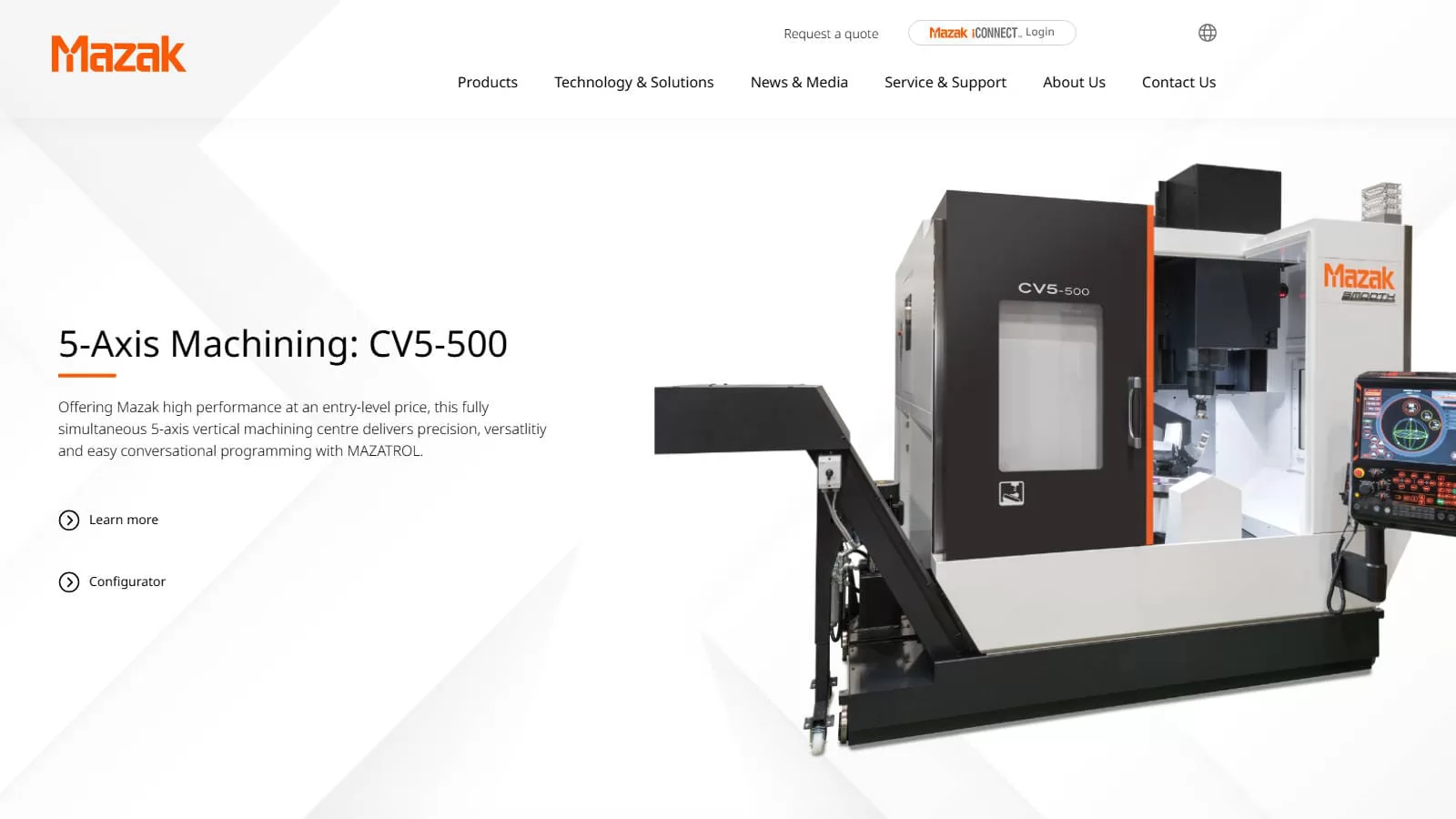
Headquarters: Japan | Representative Series: INTEGREX i, INTEGREX j, INTEGREX e-H
Overview: Yamazaki Mazak is a major manufacturer of multitasking CNC machines. Its INTEGREX family combines the functions of a CNC turning center and a machining center.
Key Strengths: The INTEGREX portfolio covers different workpiece sizes and production requirements. Depending on the configuration, machines can provide simultaneous 5-axis machining, Y-axis movement, second spindles, lower turrets, and different milling spindle configurations. Mazak also offers specialized process integration. The INTEGREX AG, for example, combines turning, milling, 5-axis machining, and gear machining in one platform. The range extends from compact machines to configurations designed for large and long workpieces.
Best For: Mazak is a strong choice for manufacturers seeking flexible multitasking equipment that can consolidate turning, milling, and specialized processes.
Headquarters: Japan | Representative Series: MULTUS
Overview: Okuma offers dedicated multitasking machines through its MULTUS series. The platform is designed to combine turning and milling operations for complex components.
Key Strengths: MULTUS machines can incorporate milling spindles, B-axis capability, automatic tool changing, and additional spindle or turret configurations depending on the model. This allows manufacturers to perform turning, drilling, milling, tapping, and related operations in a single machining process. Another consideration is Okuma's integrated CNC ecosystem. The company develops both machine tools and CNC control technology, which can simplify integration for manufacturers that want a unified equipment and control environment.
Best For: Okuma is well suited to manufacturers requiring flexible multitasking equipment for complex industrial components and production environments where process consolidation is important.
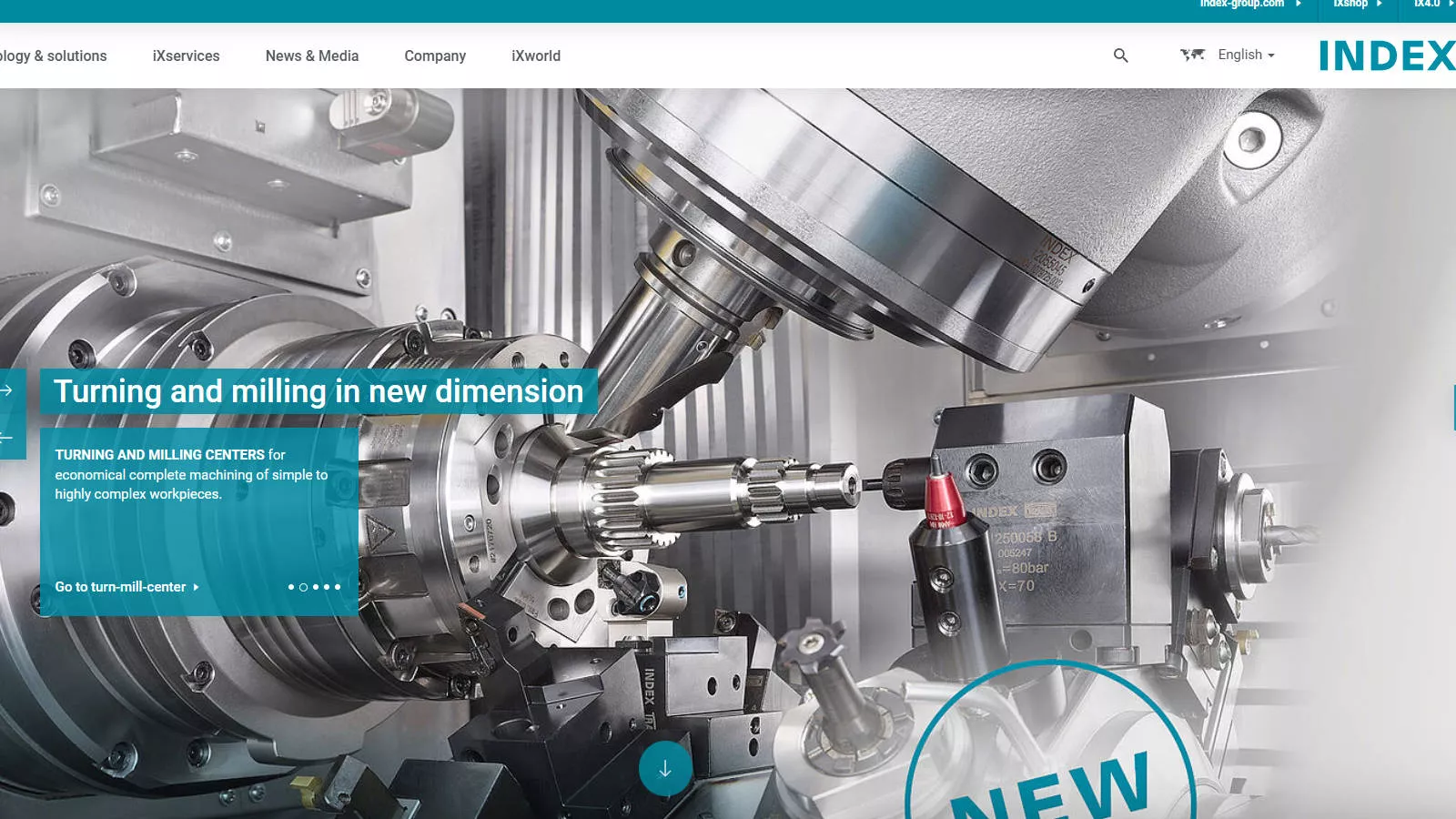
Headquarters: Germany | Representative Series: INDEX G Series, R Series, TRAUB Solutions
Overview: INDEX is a particularly relevant manufacturer for buyers looking for dedicated turn-mill technology and production-oriented machining. The company maintains a dedicated portfolio of turn-mill centers covering different machine sizes and configurations.
Key Strengths: INDEX focuses on integrating turning and milling while maintaining production efficiency. Its machine range includes different spindle, tooling, automation, and workpiece configurations. The company's long experience in CNC turning also provides a strong foundation for developing machines that combine turning productivity with advanced milling capability. This makes INDEX relevant for manufacturers that need more than a basic turning center but still place a strong emphasis on turning performance and production throughput.
Best For: INDEX is a good option for manufacturers producing complex components in demanding production environments where productivity and process integration are priorities.
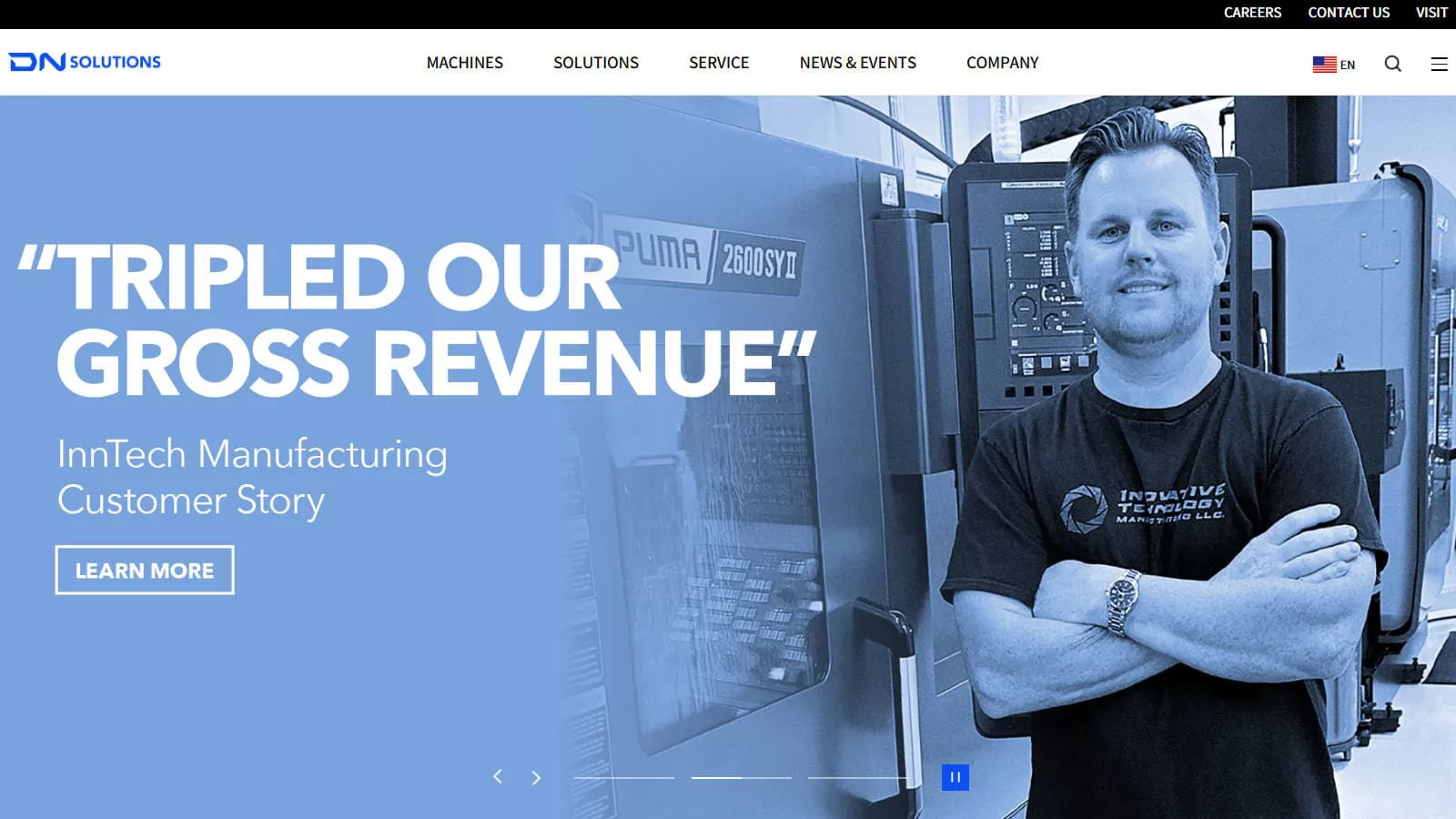
Headquarters: South Korea | Representative Series: SMX Series
Overview: DN Solutions, formerly known as Doosan Machine Tools, offers multi-axis mill-turn machines through its SMX series.
Key Strengths: The SMX platform combines turning and milling functions with configurations that can include left and right spindles, B-axis milling, Y-axis movement, and lower turret systems. This architecture allows manufacturers to perform several operations without repeatedly transferring the component between separate turning and milling machines. DN Solutions also maintains a broad CNC machine portfolio, including turning centers and machining centers. This can be useful for buyers comparing different machining strategies within one supplier's product range.
Best For: DN Solutions is suitable for manufacturers seeking multi-axis mill-turn capability alongside a broader range of CNC machining equipment.
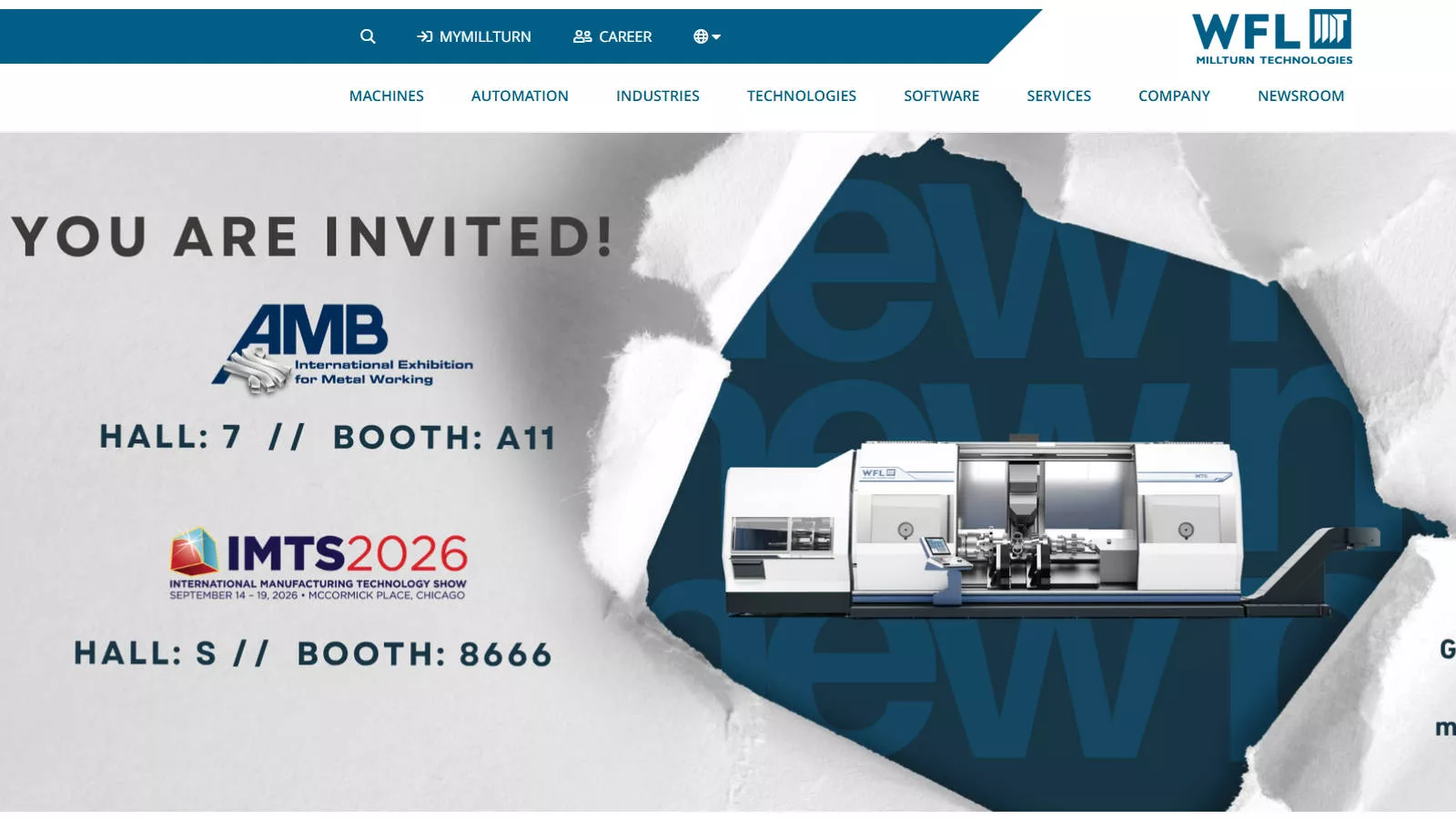
Headquarters: Austria | Representative Series: MILLTURN
Overview: WFL is one of the most specialized manufacturers in this list. The company focuses specifically on multifunctional turning-boring-milling centers rather than offering turn-mill machines as only one part of a much broader portfolio.
Key Strengths: Its MILLTURN machines combine turning, milling, drilling, boring, and other machining operations. The range covers different workpiece sizes and configurations, including machines designed for large and complex components. Depending on the model, WFL machines can incorporate B-axis machining, counter-spindle configurations, integrated measurement, and other complete-machining functions. This specialization makes WFL particularly relevant when the manufacturing objective is to consolidate a large number of machining operations into one machine.
Best For: WFL is well suited to manufacturers machining complex shafts, aerospace components, energy equipment, and large or difficult-to-process workpieces.
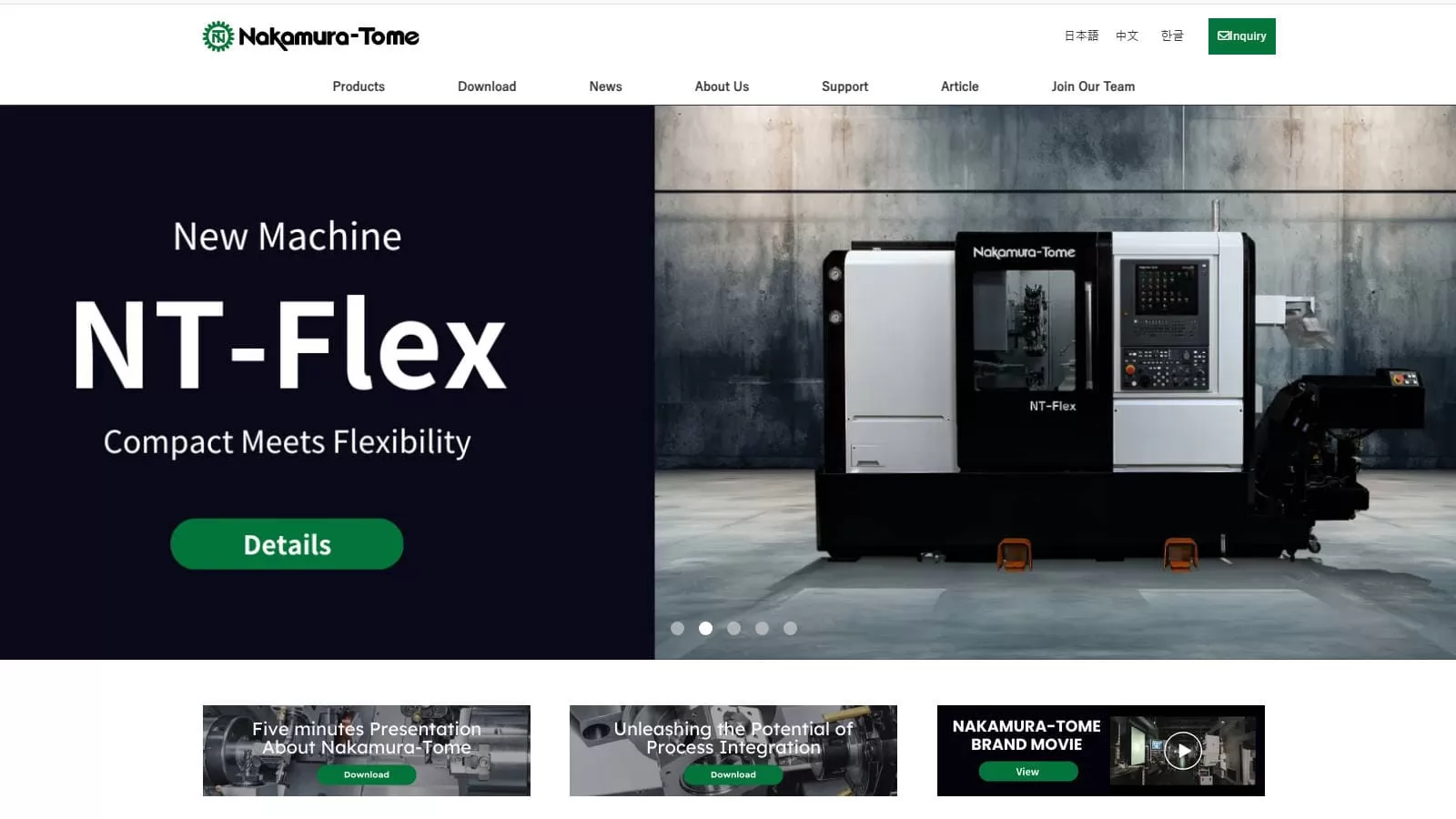
Headquarters: Japan | Representative Series: NT Series, NT-Flex
Overview: Nakamura-Tome is a Japanese machine-tool manufacturer with a strong focus on precision turning and multitasking machining. Its machines combine turning with milling and other secondary operations, making the company relevant to manufacturers producing complex precision components.
Key Strengths: Depending on the model, Nakamura-Tome machines can incorporate Y-axis movement, milling capability, multiple spindles, and multi-tool configurations. The NT-Flex, for example, combines turning and milling capabilities in a flexible multitasking platform. The company's emphasis on precision turning also makes its machines attractive when manufacturers need to maintain turning performance while adding milling operations to the same production process.
Best For: Nakamura-Tome is a strong option for precision manufacturers producing complex turned components that require additional milling and multi-axis operations.
Headquarters: Germany | Representative Technology: Mill-Turn
Overview: CHIRON approaches mill-turn machining from a strong machining-center and automation background. Its Mill-Turn technology combines milling, turning, drilling, and multi-axis machining.
Key Strengths: CHIRON's Mill-Turn solutions can support simultaneous 5-axis machining and configurations with main and counter spindles. A major differentiator is the company's emphasis on automated manufacturing. Machine tools can be combined with loading, handling, and other production automation technologies. This approach is particularly relevant to manufacturers that are planning a complete production cell rather than purchasing a standalone machine.
Best For: CHIRON is a strong candidate for automated production environments where multi-axis machining and production integration are both important.
Headquarters: Germany | Representative Series: G350T, G550T, G750T
Overview: GROB offers a machining-center-based approach to mill-turn technology. Its G350T, G550T, and G750T are 5-axis universal mill-turn machining centers designed to perform turning and milling in one clamping.
Key Strengths: The different models address different workpiece sizes and production requirements. The platform combines 5-axis machining with turning capability, making it suitable for components that require complex multi-axis machining as well as rotational operations. GROB also has extensive experience in automation and production systems, allowing its mill-turn equipment to be integrated into broader manufacturing solutions.
Best For: GROB is particularly suitable for manufacturers that want strong 5-axis milling capability together with integrated turning, especially in aerospace, automotive, energy, and general industrial applications.
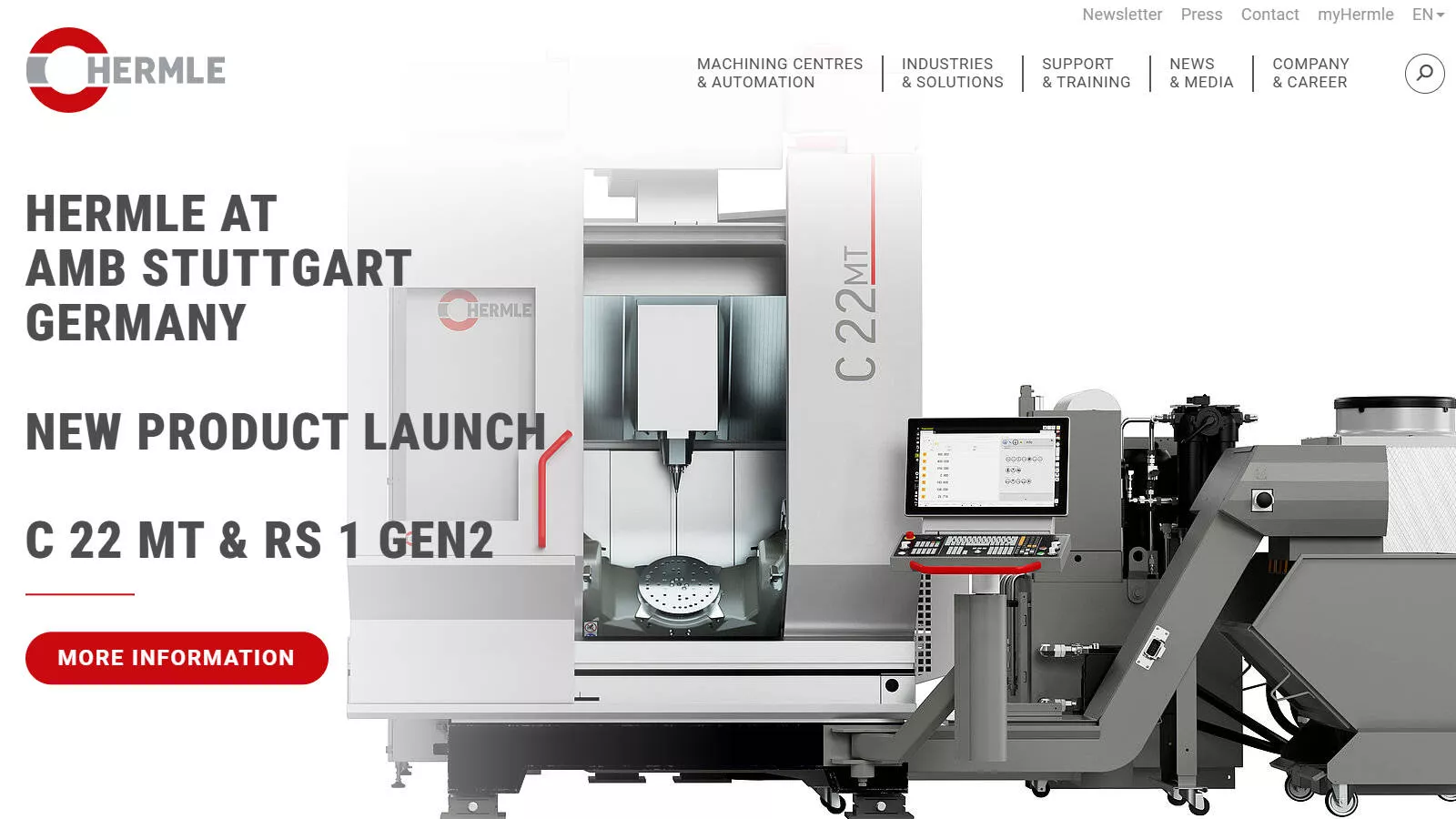
Headquarters: Germany | Representative Series: C62 MT, C62 U MT
Overview: HERMLE is primarily recognized for high-performance 5-axis machining centers rather than conventional turn-mill lathes. Its MT configurations, however, add turning capability to its machining-center platform.
Key Strengths: HERMLE's MT machines combine 5-axis milling with turning operations, allowing complex components to be machined with fewer workholding changes. This approach is particularly useful when milling represents a substantial part of the machining process and turning is an integrated requirement rather than the primary operation. For this reason, HERMLE should be viewed as a machining-center-based turn-mill solution rather than a traditional turning-machine manufacturer.
Best For: HERMLE is a good choice for manufacturers prioritizing high-end 5-axis machining with integrated turning capability.
| Manufacturer | Country | Representative Series | Key Capability | Best For |
|---|---|---|---|---|
| DMG MORI | Germany / Japan | NTX, NT, CTX TC | Integrated turn-mill and multi-axis machining | Complex high-value parts |
| Yamazaki Mazak | Japan | INTEGREX | Multi-tasking and process integration | Flexible production |
| Okuma | Japan | MULTUS | Turning, milling and multi-axis machining | Complex industrial parts |
| INDEX / TRAUB | Germany | G Series, R Series | Production-oriented turn-mill machining | High-productivity machining |
| DN Solutions | South Korea | SMX | Multi-axis mill-turn | Flexible industrial production |
| WFL | Austria | MILLTURN | Turning, boring and milling | Complex and large components |
| Nakamura-Tome | Japan | NT, NT-Flex | Precision multitasking turning | Complex precision parts |
| CHIRON Group | Germany | Mill-Turn | 5-axis machining and automation | Automated production |
| GROB-WERKE | Germany | G350T, G550T, G750T | 5-axis mill-turn machining | Complex industrial parts |
| HERMLE | Germany | C62 MT / C62 U MT | 5-axis machining with turning | High-precision complex parts |
The right machine should be selected according to the parts and production process rather than the manufacturer's name alone.
1. Machine Configuration and Axes
Start with the required workpiece geometry. Y-axis capability may be sufficient for some off-center milling operations, while more complex parts may benefit from B-axis and simultaneous 5-axis machining. More axes are not automatically better. The goal is to select a configuration that eliminates unnecessary setups without adding unused complexity.
2. Turning and Milling Performance
Evaluate both sides of the machine. For turning, compare spindle speed, torque, chuck size, workpiece diameter, and turning length. For milling, consider spindle power, speed, tool capacity, B-axis capability, and machining envelope. A machine with strong turning performance but limited milling capability may not deliver the expected benefits for genuinely complex parts.
3. Spindle and Workpiece Requirements
A sub-spindle can help complete multiple faces of a component without manual repositioning. However, it is not necessary for every application. Also check the maximum workpiece diameter and length, bar capacity, spindle bore, workpiece weight, and chuck configuration against the actual production range.
4. Automation and Process Integration
For repetitive production, consider bar feeders, robotic loading, tool monitoring, probing, automated part transfer, and other cell-level automation. Manufacturers such as CHIRON and GROB may be particularly relevant when the project involves a broader automated production system rather than an individual machine.
5. Service and Application Support
Turn-mill centers are complex capital equipment. Before purchasing, evaluate installation, operator training, application engineering, spare-parts availability, maintenance, and local service coverage. The best machine on paper may not be the best investment if adequate technical support is difficult to obtain in the target market.
A CNC turning center is primarily designed for turning, although some models can include live tooling, Y-axis movement, or a sub-spindle. A turn-mill center is designed to integrate turning with more extensive milling and multi-axis operations.
| Feature | Turn-Mill Center | CNC Turning Center |
|---|---|---|
| Turning | Yes | Yes |
| Milling | Advanced | Limited or optional |
| Y-axis | Common | Optional |
| B-axis | Common on advanced models | Less common |
| Sub-spindle | Common on many models | Optional |
| Multi-axis machining | Strong | Moderate to advanced |
| Complete machining | High potential | Configuration dependent |
| Typical application | Complex multi-operation parts | Turning-focused production |
This distinction is important when comparing suppliers; a turning center with live tooling should not automatically be treated as equivalent to a dedicated mill-turn machine. For buyers interested specifically in conventional turning-center suppliers, you can explore detailed market insights through LEADCNC's separate guide to CNC turning center manufacturers, which provides a different manufacturer comparison tailored to specialized production requirements.
The primary advantage of a turn-mill center is process consolidation.
A complex component may require turning, drilling, milling, tapping, and machining of several faces. Using separate machines can introduce additional setups, fixtures, transfers, and inspection stages. A turn-mill center can combine many of these operations in one setup. This can reduce workpiece handling, improve positional consistency between features, shorten the production route, and create more opportunities for automation.
However, turn-mill equipment is not automatically the best choice for every part. If production consists mainly of straightforward turning operations, a conventional CNC turning center may be simpler and more economical.
Not every CNC machining application requires a conventional metal turn-mill center. Aluminum doors, windows, curtain walls, and other profile-based products often require a different machining workflow.
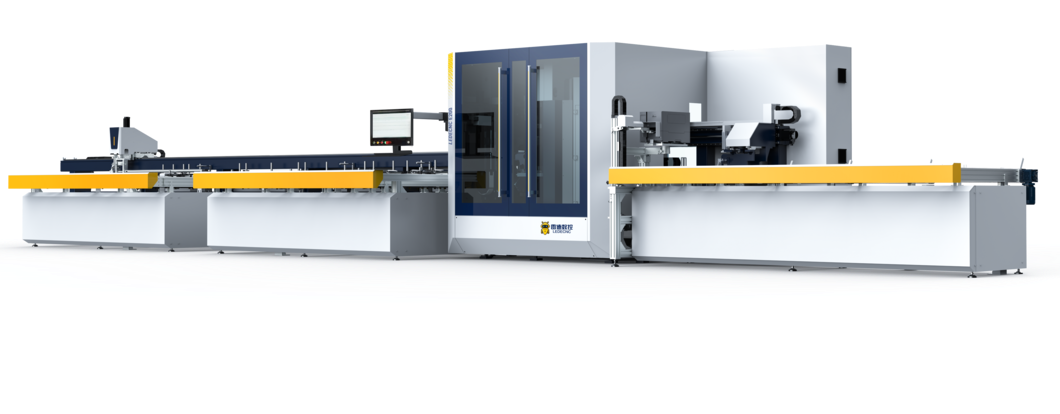
LEADCNC provides CNC machining centers and automated solutions for aluminum and light-alloy profile processing, including 3-axis, 4-axis, and 5-axis configurations. Its CNC machining center portfolio is designed for operations such as milling, drilling, tapping, and profile machining.
If your project involves aluminum profile processing rather than conventional round or complex turned components, contact LEADCNC to discuss the required machining configuration and production workflow.

Discover the top 10 CNC turn-mill center manufacturers in 2026, featuring DMG Mori, Mazak, and more. Explore advanced automation, precision, and sustainability trends, with insights from LEADCNC, a leader in aluminum door and window production lines.
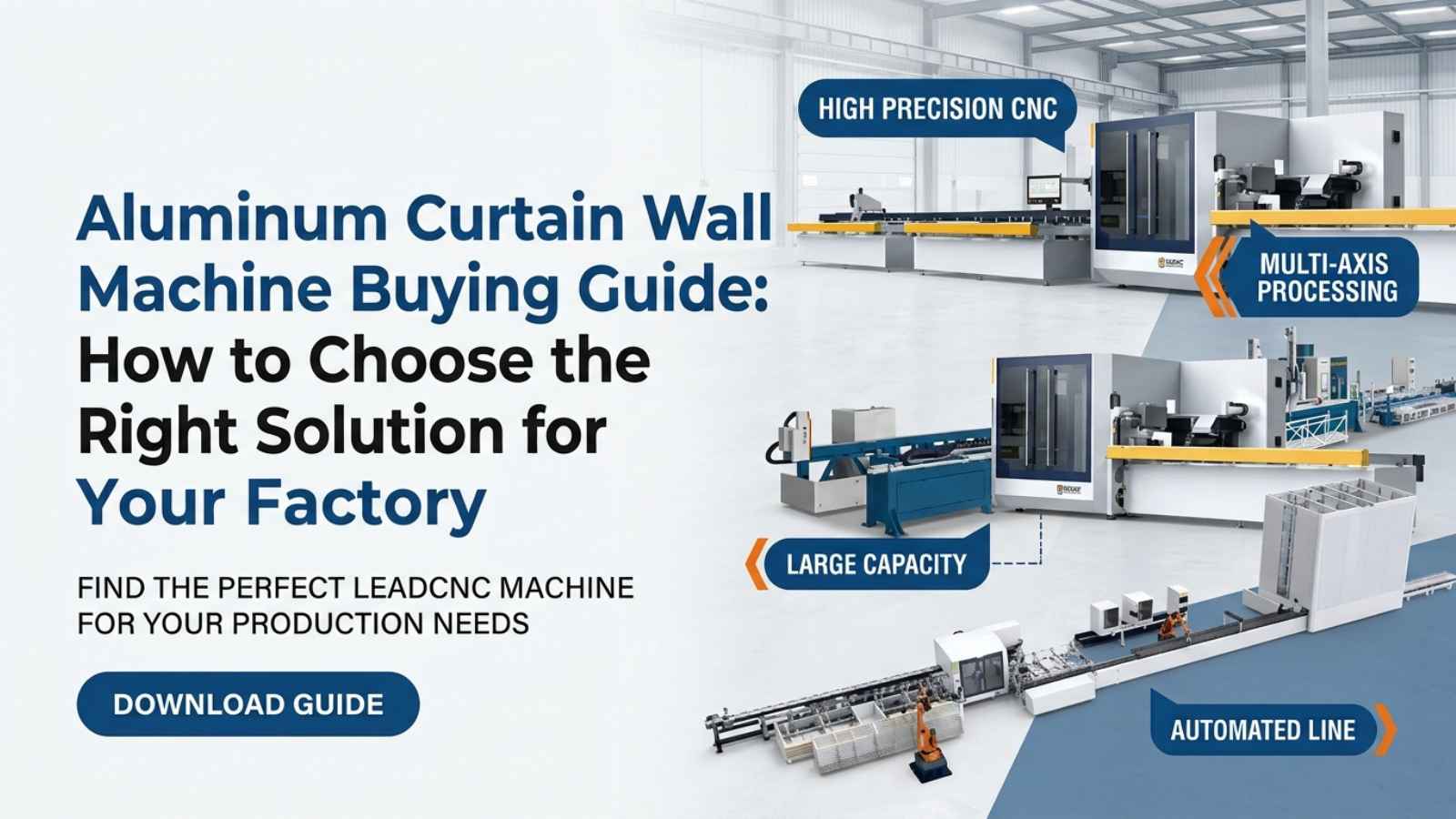
Looking for an aluminum curtain wall machine? Learn how to choose the right CNC curtain wall equipment, production line, and automation solution for your factory.

This guide will examine the shifting mechanics of the industry and detail the precise machinery configurations required to scale your commercial throughput.
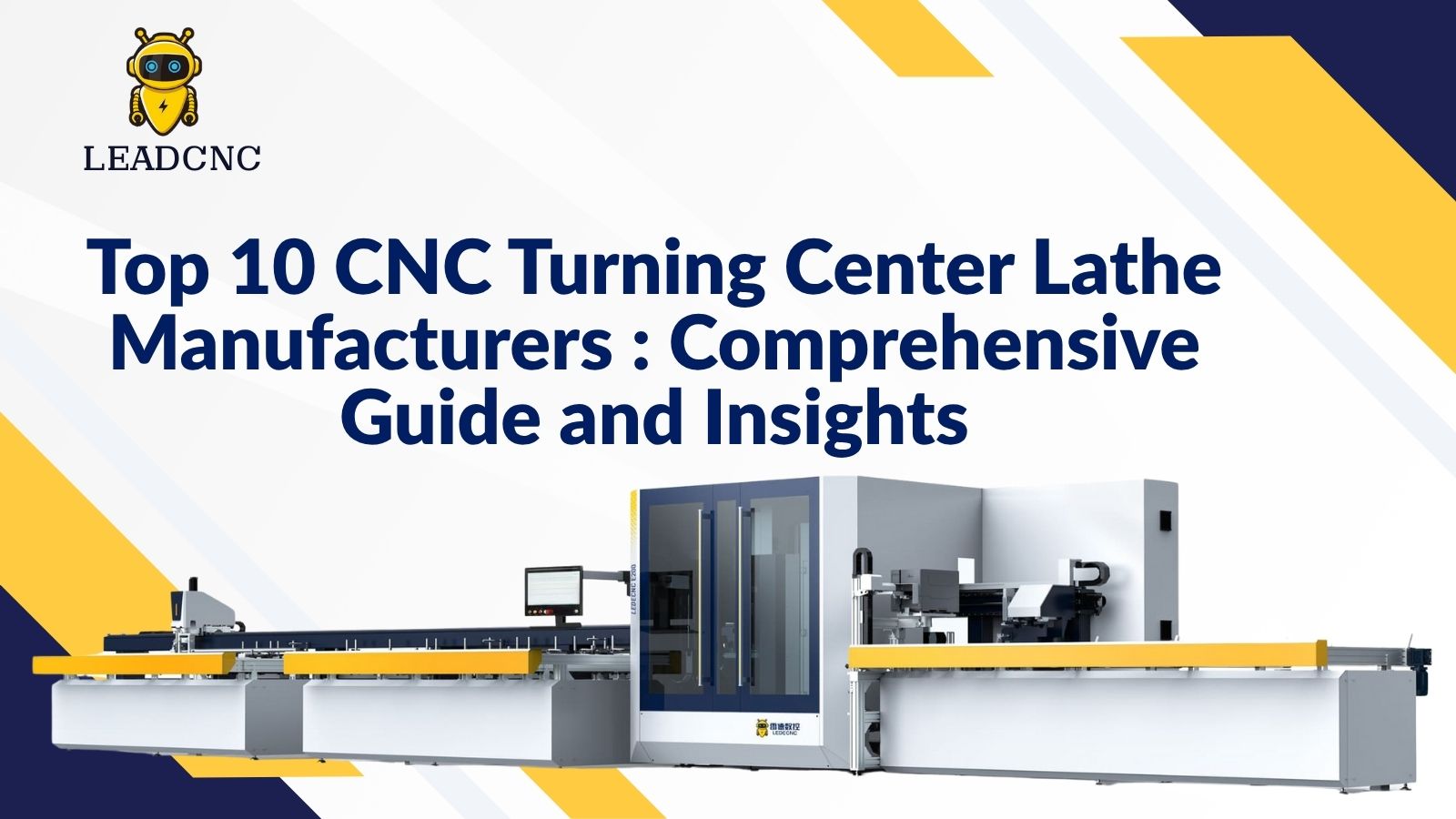
Discover the top 10 CNC turning center lathe manufacturers in 2026, featuring detailed profiles, key specifications, and market insights for precision manufacturing.











.png)