












_1794293033_WNo_1600d900.webp)
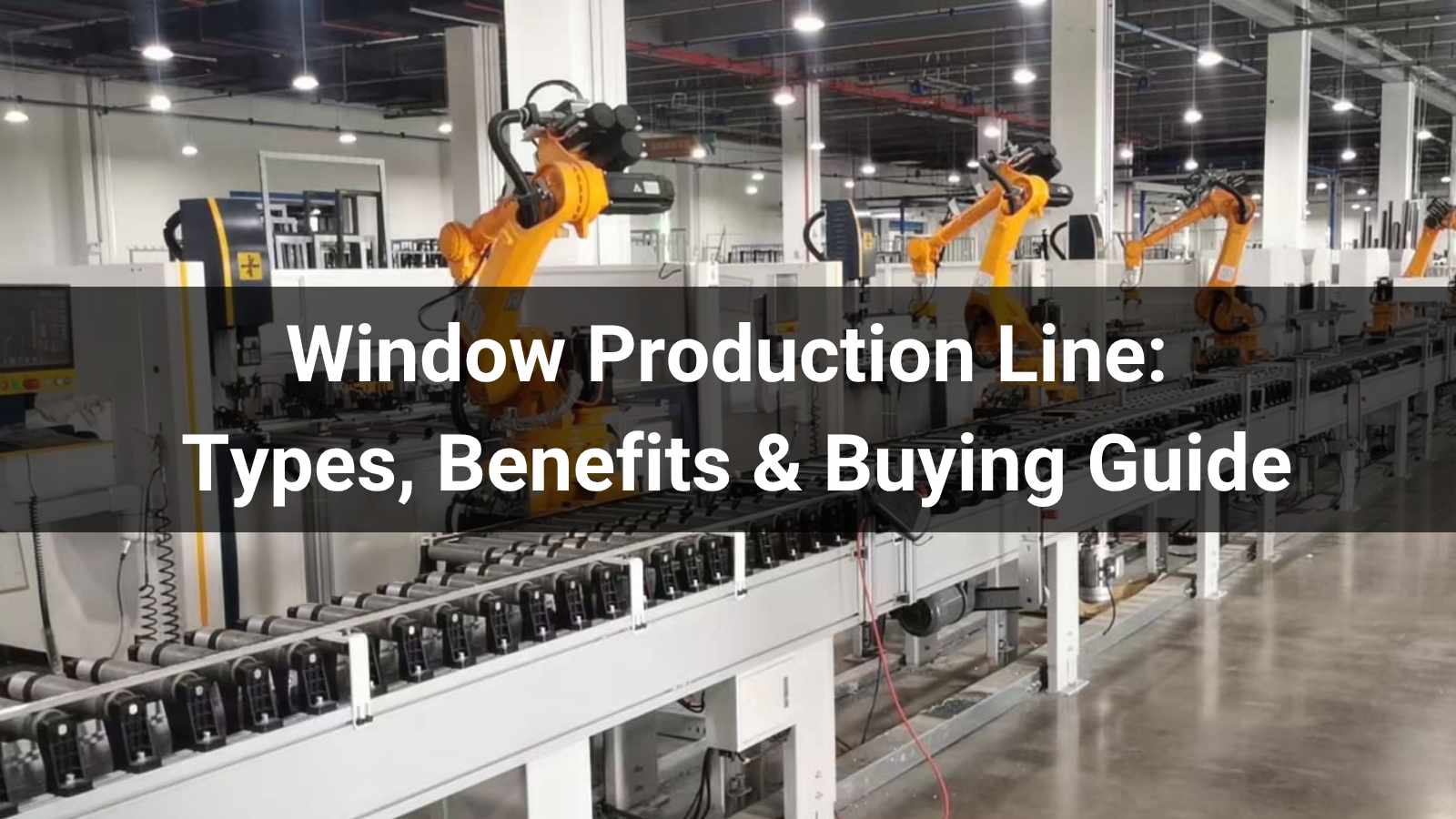
As demand for customized aluminum windows continues to grow, manufacturers are facing increasing pressure to improve production capacity, maintain consistent product quality, and reduce labor costs. A modern window production line provides an integrated manufacturing solution by connecting cutting, drilling, milling, assembly, and material handling into a coordinated workflow. Compared with traditional standalone equipment, an automated production line helps manufacturers improve production efficiency, reduce repetitive manual operations, and achieve more consistent processing results.
Choosing the right window production line requires careful consideration of production capacity, window types, aluminum profile specifications, factory layout, and automation requirements. Different manufacturers need different equipment configurations to match their actual production processes and long-term development plans. This guide explores how a window production line works, its main types, key equipment, automation benefits, and essential purchasing considerations. It also introduces how LEADCNC provides intelligent aluminum window manufacturing equipment and integrated production line solutions to help manufacturers upgrade their production capabilities.
Quick Navigation
- What Is a Window Production Line?
- How Does a Window Production Line Work?
- Main Types of Window Production Lines
- Key Equipment in an Automated Window Production Line
- Benefits of an Automated Window Production Line
- How to Choose the Right Window Production Line
- Traditional vs. Automated Window Manufacturing
- Why Choose LEADCNC Window Production Line Solutions?
- Frequently Asked Questions
- Conclusion
What Is a Window Production Line?
A window production line is an integrated manufacturing system designed to process window profiles and assemble components through a series of coordinated operations. Depending on the material and product requirements, it may include cutting saws, CNC machining centers, drilling and milling machines, end milling equipment, corner assembly machines, and material handling systems.
For aluminum window manufacturers, a production line typically processes aluminum profiles into finished window frames and sashes. The workflow may include profile loading, cutting, drilling, milling, end processing, hardware preparation, corner assembly, and quality inspection.
Unlike a workshop that relies on separate machines and manual material transfer, an automated production line connects processing stations into an organized workflow. CNC equipment follows programmed instructions, while conveyors, buffer stations, and robotic handling systems can transfer profiles between production stages.
Automation levels vary according to factory requirements. Some manufacturers need connected CNC processing equipment, while larger factories may require integrated systems covering profile loading, machining, sorting, transfer, and assembly. The goal is to establish a production process that matches the factory's actual needs rather than simply adding more machines.
For manufacturers specializing in aluminum doors and windows, LEADCNC aluminum window and door production equipment provides a starting point for exploring automated manufacturing solutions.

How Does a Window Production Line Work?
An automated window production line coordinates multiple manufacturing processes to transform raw aluminum profiles into window components and finished products. The exact workflow depends on the window design and equipment configuration, but most aluminum window manufacturing systems involve the following stages.
1. Profile Loading and Material Preparation
The process begins with preparing aluminum profiles according to the production order. Profiles are selected based on their cross-sectional dimensions, alloy specifications, and intended applications. Operators or automated loading equipment then transfer the materials to the designated processing stations.
2. Profile Cutting
Aluminum profiles are cut to specified lengths and angles according to the frame and sash designs. CNC cutting saws and automatic cutting centers help achieve repeatable dimensions and consistent cutting quality. Depending on the window structure, cutting operations may include 90-degree cuts, angle cuts, and customized profile lengths.
3. CNC Drilling and Milling
After cutting, profiles move to machining stations for drilling, milling, slotting, and other operations. These processes prepare profiles for hardware installation, drainage, locking systems, and connecting components. CNC machining follows programmed instructions, reducing repeated manual measurement and improving processing consistency.
4. End Milling and Profile Preparation
End milling prepares aluminum profile ends for connection with other frame and sash components. Dedicated machines process profile ends according to the required structural design, helping improve connection accuracy and reduce unnecessary transfers between workstations.
5. Profile Sorting and Transfer
After machining, profiles need to be organized and transferred to the next production stage. Automated buffer stations, sorting systems, and material transfer equipment can organize processed profiles according to production requirements. Some systems also use labels or QR codes to support material identification and tracking.
6. Window Assembly and Quality Inspection
The final stage involves assembling processed profiles and related components into window frames and sashes. Depending on the product design, this may include corner connection, hardware installation, and glazing preparation. Finished products should be inspected for dimensional accuracy, corner connections, surface condition, and overall assembly quality.
Main Types of Window Production Lines
Window production lines can be classified according to the materials being processed, manufacturing requirements, and automation levels. For aluminum window manufacturers, solutions range from individual CNC processing machines to fully integrated intelligent production systems.
1. Semi-Automatic Window Production Line
A semi-automatic window production line combines individual processing machines with manual material handling and operator-controlled operations. Workers transfer profiles between cutting, drilling, milling, and assembly stations, while selected machines perform specific operations automatically.
This configuration suits small and medium-sized manufacturers, customized workshops, and factories with flexible order requirements. It generally requires less initial investment than a fully integrated line, although manual transfer can create bottlenecks as production volume increases.
2. CNC Aluminum Window Production Line
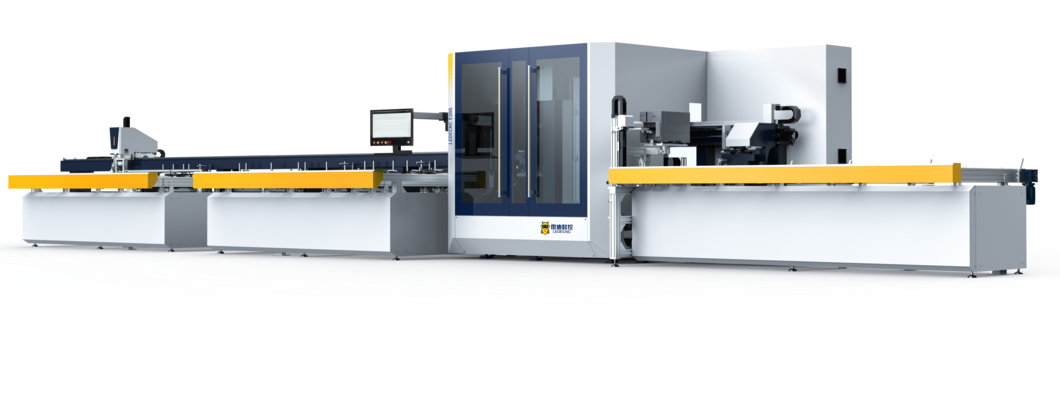
A CNC aluminum window production line connects computer-controlled equipment to improve machining accuracy and workflow efficiency. Depending on the configuration, it may include CNC cutting centers, drilling and milling machines, end milling equipment, and automatic transfer systems.
Programmed machining allows manufacturers to process different aluminum profile designs with less manual positioning and measurement. This type of line is suitable for factories seeking higher machining consistency and the flexibility to handle different window specifications.
3. Fully Intelligent Aluminum Window Production Line
A fully intelligent aluminum window production line integrates machining operations with automated material handling, sorting, and coordinated production management. Depending on the system design, robotic loading, CNC machining, automatic transfer, buffer stations, and assembly equipment can work together.
These systems focus on coordinating the entire manufacturing workflow rather than automating individual machines only. They are suitable for larger manufacturers planning to improve production visibility, reduce manual handling, and expand factory automation.
4. Customized Window and Door Production Line
Different factories have different product ranges and processing requirements. Some mainly produce aluminum casement windows, while others focus on sliding windows, aluminum doors, or curtain walls. A customized production line is planned around the factory's products, required operations, workshop space, and expected output.
Equipment quantities, transfer methods, automation modules, and production layouts can be adjusted according to actual requirements. This approach is useful for specialized manufacturers and factories integrating existing machinery into a new production system.
| Production Line Type | Automation Level | Suitable Manufacturers | Main Advantage |
|---|---|---|---|
| Semi-Automatic | Basic to Medium | Small and medium-sized factories | Flexible equipment investment |
| CNC Production Line | Medium to High | Growing manufacturers | Consistent machining accuracy |
| Fully Intelligent Line | High | Large-scale manufacturers | Integrated manufacturing workflow |
| Customized Production Line | Project-dependent | Specialized manufacturers | Application-specific configuration |

Key Equipment in an Automated Window Production Line
An efficient window production line depends on the coordination of different machines and auxiliary systems. Understanding each component helps manufacturers evaluate equipment configurations and identify investment priorities.
1. CNC Cutting Center
CNC cutting centers cut aluminum profiles according to programmed dimensions and angles. They help maintain consistent cutting accuracy and support different profile specifications. Key selection factors include profile dimensions, cutting angles, blade specifications, and required production capacity.
2. CNC Machining Center
CNC machining centers perform drilling, milling, tapping, slotting, and other profile processing operations. They are important for manufacturers that need accurate machining positions for hardware installation, drainage systems, connecting components, and customized profile structures.
3. End Milling Machine
End milling machines prepare aluminum profile ends for connection during frame and sash assembly. The appropriate configuration depends on profile geometry, processing dimensions, and the required connection method.
4. Corner Connector Processing Equipment
Specialized equipment prepares corner connectors according to the required dimensions and assembly methods. For factories producing different window models, compatible processing equipment helps improve assembly efficiency and connection consistency.
5. Intelligent Buffer and Transfer Systems
Conveyors, buffer stations, automatic transfer systems, and robotic handling equipment coordinate profile movement between machining stations. These systems can reduce repetitive manual handling and make processed profiles easier to organize before assembly.
6. Production Management and Identification Systems
For larger manufacturing operations, production management systems help organize orders, processing information, and material flow. Labels, QR codes, and identification methods can support profile tracking and connect production information with individual components.
Benefits of an Automated Window Production Line
As window manufacturers face increasing competition, improving production efficiency has become an important business priority. An automated window production line can help factories optimize manufacturing processes in several ways.
1. Higher Production Efficiency
Traditional workshops often require workers to move profiles between individual machines and coordinate each processing stage manually. Automated production lines connect different operations through coordinated equipment and material transfer systems, reducing unnecessary movement and improving workflow continuity.
2. Improved Machining Accuracy and Consistency
Window manufacturing requires accurate profile dimensions and machining positions. CNC equipment follows programmed instructions to control processing operations, helping reduce variations caused by manual measurement and improve repeatability across production batches.
3. Reduced Dependence on Manual Labor
Automated loading, transfer, machining, and sorting systems can reduce repetitive manual activities. Operators can focus more on equipment supervision, production management, and quality inspection. Automation does not eliminate the need for skilled workers, but it can help factories use their workforce more efficiently.
4. Better Material Management
Cutting programs, production planning, and profile identification systems can support more accurate material preparation and reduce avoidable handling errors. Actual material savings depend on profile design, cutting plans, production management, and operator practices.
5. Greater Production Flexibility
Programmable CNC equipment and modular production line configurations allow manufacturers to adjust processing instructions and equipment arrangements for different window specifications. This is valuable for factories producing multiple aluminum window and door categories.
6. Easier Production Expansion
An integrated production system provides a more structured foundation for future expansion. Manufacturers can add machining stations, transfer modules, robotic equipment, or assembly capacity according to actual production bottlenecks.
How to Choose the Right Window Production Line
Selecting the right window production line requires more than comparing machine prices or advertised production capacities. Manufacturers should evaluate the complete manufacturing process and choose equipment that meets current requirements while allowing room for future development.
1. Identify Your Main Window Products
Define the types of windows and doors your factory produces. Aluminum casement windows, sliding windows, louvered windows, and aluminum doors may involve different profile structures and machining requirements. Identify your main product categories, profile specifications, hardware requirements, and typical order combinations before selecting equipment.
2. Evaluate Required Production Capacity
Estimate daily and monthly output requirements and consider expected order growth. Advertised output figures should not be treated as guaranteed results because actual capacity depends on window dimensions, profile complexity, machining operations, equipment configuration, material supply, and assembly processes. Ask the supplier to evaluate representative products before confirming capacity.
3. Check Profile Processing Requirements
Aluminum profiles vary in dimensions, cross-sectional structures, and processing requirements. Confirm that the selected machines are compatible with your materials and production processes.
- Maximum and minimum profile dimensions.
- Maximum processing length and cutting range.
- Required cutting angles and machining positions.
- Drilling, milling, tapping, and slotting capabilities.
- Profile positioning and clamping methods.
- Compatibility with existing materials and processes.
4. Determine the Appropriate Automation Level
Not every manufacturer needs a fully intelligent production line. The appropriate automation level depends on order volume, labor availability, investment budget, factory space, and production management capabilities.
| Automation Level | Typical Configuration | Best Suited For |
|---|---|---|
| Basic | Individual CNC machines and manual transfer | Small workshops and gradual upgrades |
| Intermediate | Connected machining equipment and transfer systems | Growing window manufacturers |
| Advanced | Integrated machining, robotic handling, and intelligent sorting | Large-scale automated factories |
Manufacturers should balance automation investment with actual production needs. An excessively complex system may increase initial costs and management requirements without delivering sufficient operational benefits.
5. Consider Factory Layout and Available Space
A window production line needs suitable space for material storage, machine installation, profile transfer, operator access, and finished-product handling. Before finalizing the configuration, suppliers should review the factory floor plan, building dimensions, production area, material entry points, and existing machinery positions.
6. Check Software Compatibility and Production Management
Modern aluminum window manufacturing increasingly relies on digital design and production information. Check whether the proposed equipment can work with your existing window design software and production data formats. For advanced systems, production management integration, material identification, and order tracking can improve information flow.
7. Evaluate Supplier Experience and After-Sales Support
A window production line is a long-term investment. Evaluate the supplier's engineering capabilities, installation experience, training services, and technical support before purchasing.
- Experience in aluminum window and door manufacturing equipment.
- Ability to design customized production line layouts.
- Equipment installation and commissioning support.
- Operator training and technical documentation.
- Spare parts availability and maintenance services.
- Remote troubleshooting and after-sales response.
- References from relevant manufacturing projects.
A qualified supplier should understand your production process and recommend an equipment configuration based on real requirements rather than simply offering a standard machinery package.
Traditional vs. Automated Window Manufacturing
Traditional window manufacturing often uses individual machines operated as separate workstations. Although this approach can meet the needs of smaller factories, it may create challenges when production volume increases or product requirements become more complex.
An automated window production line connects processing operations into a coordinated workflow. The main differences are summarized below.
| Factor | Traditional Manufacturing | Automated Production Line |
|---|---|---|
| Material Handling | Mostly manual transfer | Can integrate automated transfer |
| Machining | Separate machine operations | Coordinated CNC processing |
| Labor Requirements | More repetitive manual work | Reduced manual handling |
| Processing Consistency | More dependent on operator procedures | Program-controlled repeatability |
| Production Management | More manual coordination | Can integrate digital tracking |
| Production Expansion | May require additional independent stations | Can support modular upgrades |
The main difference is the level of integration. Traditional manufacturing can remain practical for factories with smaller output requirements and highly customized orders. Automated production lines become increasingly valuable when manufacturers need coordinated processing, reduced material handling, and more consistent production management.
However, automation does not automatically guarantee better results. Equipment configuration, process planning, operator training, and maintenance all influence production performance. Manufacturers should evaluate the complete system rather than focusing on automation level alone.
Why Choose LEADCNC Window Production Line Solutions?
Choosing an experienced equipment manufacturer is essential when planning an automated aluminum window factory. LEADCNC focuses on CNC aluminum profile processing machinery and intelligent production line solutions for manufacturers looking to improve machining efficiency and upgrade their production workflows.
Founded in 2007, LEADCNC has developed individual CNC machines and integrated production line systems for aluminum window and door manufacturing. Its equipment portfolio covers cutting, drilling, milling, profile processing, material handling, and intelligent production solutions.
1. Complete Aluminum Window Production Line Solutions
LEADCNC provides integrated aluminum window and door production line configurations. Depending on the selected solution, different machines and automation modules can be coordinated to support profile loading, machining, transfer, sorting, and assembly. This approach helps manufacturers plan a more organized workflow and reduce unnecessary material movement.
2. Multiple Production Line Configurations
LEADCNC offers different intelligent aluminum window and door production line configurations to accommodate varying manufacturing requirements.
- S100: An intelligent aluminum window and door production line designed to coordinate profile processing.
- S200: An intelligent production line supporting aluminum windows, doors, and curtain wall manufacturing.
- SU100: A fully intelligent aluminum window and door production line designed for integrated manufacturing operations.
- SU200: A fully intelligent production solution featuring coordinated machining and assembly operations.
- SU600: An advanced intelligent production line designed for manufacturers seeking a high level of automation and integrated production management.
The appropriate configuration depends on the factory's product range, expected capacity, workshop layout, and automation requirements. Manufacturers can explore the LEADCNC window production line range to compare available equipment solutions.
3. CNC Machining and Processing Expertise
LEADCNC provides CNC equipment for aluminum profile processing operations, including cutting, drilling, milling, and end milling. These machines can be incorporated into production line configurations according to the required manufacturing process.
4. Customized Factory Planning
Workshop dimensions, material flow, existing equipment, product specifications, and target output all influence the final production line configuration. LEADCNC's production line solutions can be planned around specific factory requirements, allowing manufacturers to consider equipment combinations, workflow organization, and automation modules as part of a complete project.
5. International Project Experience and Technical Support
LEADCNC reports that its machinery has been exported to more than 70 countries and regions. The company also highlights its engineering team and experience in CNC equipment development and manufacturing.
For overseas manufacturers, technical communication, installation planning, operator training, and after-sales support should be discussed before purchasing. These services are important for establishing stable production operations after equipment delivery.
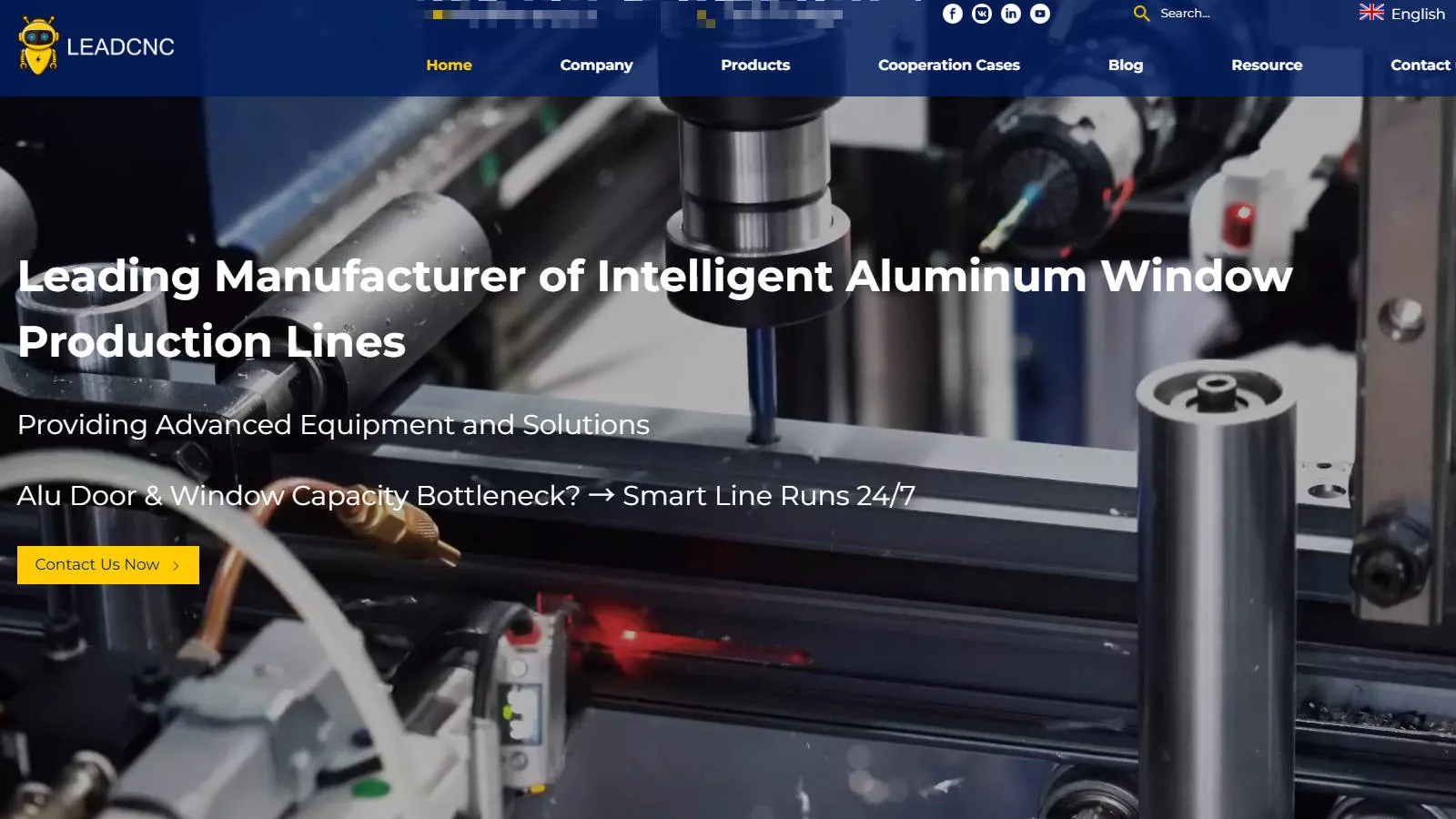
Whether you are establishing a new aluminum window factory or upgrading an existing workshop, LEADCNC can help evaluate suitable CNC equipment and intelligent production line configurations. Visit LEADCNC to explore its aluminum window manufacturing solutions.
Frequently Asked Questions About Window Production Lines
1. What is a window production line?
A window production line is an integrated manufacturing system combining equipment for profile cutting, drilling, milling, material handling, and window assembly. Its configuration depends on the window material and manufacturing requirements.
2. What machines are needed for an aluminum window production line?
Typical equipment includes CNC cutting saws, machining centers, drilling and milling machines, end milling machines, corner processing equipment, transfer systems, and assembly stations. The exact combination depends on the factory's products and automation requirements.
3. What is the difference between a semi-automatic and fully automatic window production line?
A semi-automatic line relies more on manual material transfer and operator coordination. A fully automatic line integrates more processing operations with automated loading, transfer, sorting, and other intelligent manufacturing functions.
4. Is an automated window production line suitable for small factories?
It can be suitable, but the automation level should match the factory's output and budget. Small manufacturers may start with connected CNC machines and gradually add automated handling systems as production grows.
5. How much does a window production line cost?
The cost varies according to equipment configuration, number of machines, automation level, processing capacity, factory layout, and customized requirements. Manufacturers should request a project-specific quotation rather than rely on a general price estimate.
6. How many windows can a production line manufacture per day?
Daily output depends on window dimensions, product complexity, machining operations, equipment configuration, working hours, and assembly capacity. Suppliers should evaluate representative products before providing a realistic production estimate.
7. Can a window production line manufacture different window types?
Depending on machine capabilities and configuration, an aluminum window production line can process products such as casement windows, sliding windows, louvered windows, and aluminum doors. Specific compatibility should be confirmed with the equipment manufacturer.
8. How long does it take to install a window production line?
Installation time depends on system size, equipment quantity, factory preparation, electrical connections, and commissioning requirements. An integrated production line generally requires more planning than installing individual machines.
9. Why should I choose LEADCNC for an aluminum window production line?
LEADCNC provides CNC aluminum profile processing machinery and integrated intelligent production line solutions. Its product range includes S100, S200, SU100, SU200, and SU600 systems, allowing manufacturers to evaluate different configurations according to their production requirements.
Conclusion: Build a More Efficient Window Manufacturing Operation with LEADCNC
Choosing the right window production line is an important investment for manufacturers seeking improved production efficiency, consistent machining quality, and better factory management. From semi-automatic equipment configurations to fully intelligent aluminum window production systems, the ideal solution should match the factory's product range, processing requirements, production capacity, and long-term development plans.
For aluminum window manufacturers planning to upgrade their operations, LEADCNC provides CNC processing equipment and integrated intelligent production line solutions, including S100, S200, SU100, SU200, and SU600 configurations. With experience in aluminum profile processing machinery and customized production line planning, LEADCNC helps manufacturers evaluate equipment combinations that fit their manufacturing needs.
Ready to improve your aluminum window manufacturing process? Visit LEADCNC to explore intelligent window production solutions and discuss the right equipment configuration for your factory.