


.png)


When global facade contractors, commercial building developers, and architectural engineers design landmark skyscrapers, the structural integrity of the building envelope relies entirely on the precision of the manufacturing plant. In modern facade engineering, executing complex geometric architectural designs requires moving away from manual shop-floor methods. Navigating tight project schedules, volatile skilled labor pools, and micro-level architectural tolerances has changed the factory layout.
For manufacturing decision-makers aiming to secure high-tier commercial contracts, investing in a heavy-duty, automated aluminum curtain wall machine is no longer just an upgrade—it is a core requirement for remaining competitive. Shifting to an automated CNC setup allows factories to achieve exceptional cutting and milling precision while significantly lowering reliance on manual labor.
Below, this guide will examine the shifting mechanics of the industry and detail the precise machinery configurations required to scale your commercial throughput.
Traditional facade manufacturing long relied on manual layouts, standalone punch presses, and single-head saws operated by highly experienced technicians. However, the commercial construction industry now demands structural glazing systems and unitized curtain walls that leave no room for manual measurement errors. As structural wind loads increase and profile wall thicknesses become more varied, manual drilling and milling frequently lead to misaligned connection brackets, compromised thermal breaks, and expensive material waste.
To eliminate these bottlenecks, advanced production facilities are transitioning to integrated, software-driven fabrication cells. Utilizing a dedicated aluminum curtain wall machine allows a factory to transform raw, oversized aluminum extrusions into highly complex, ready-to-assemble mullions and transoms in a single operational cycle. Industry-leading machinery brands like LEADCNC have pioneered this automated transition, providing contract fabricators worldwide with the rigid CNC architecture needed to handle heavy architectural profiles while cutting out multi-station handling delays.
Upgrading a facility requires an evaluation of current manufacturing limitations against the production capabilities offered by modern CNC automation.
| Traditional Production Challenges | Automated CNC Machine Solutions |
|---|---|
| Manual layout errors & high scrap rates: Hand-marking hole centers on 6-meter profiles frequently causes misalignments, leading to costly structural remakes. | Micron-level precision: High-resolution servo motors and industrial linear guide rails eliminate human error, ensuring consistent accuracy across thousands of consecutive pieces. |
| Heavy reliance on skilled operators: Finding and retaining specialized layout and machining operators creates severe production bottlenecks. | Reduced labor dependence: User-friendly CNC control interfaces allow a single machine operator to oversee complex multi-axis milling and drilling workflows. |
| Multi-station material handling: Moving heavy profiles between separate cutting, drilling, and routing stations slows down throughput and risks surface scratching. | All-in-one processing: Advanced machining setups combine multi-angle mitre cutting, multi-sided drilling, and hardware routing into a single industrial footprint. |
Building a high-throughput, low-labor production line requires a combination of specialized CNC machinery engineered specifically for architectural aluminum extrusions.
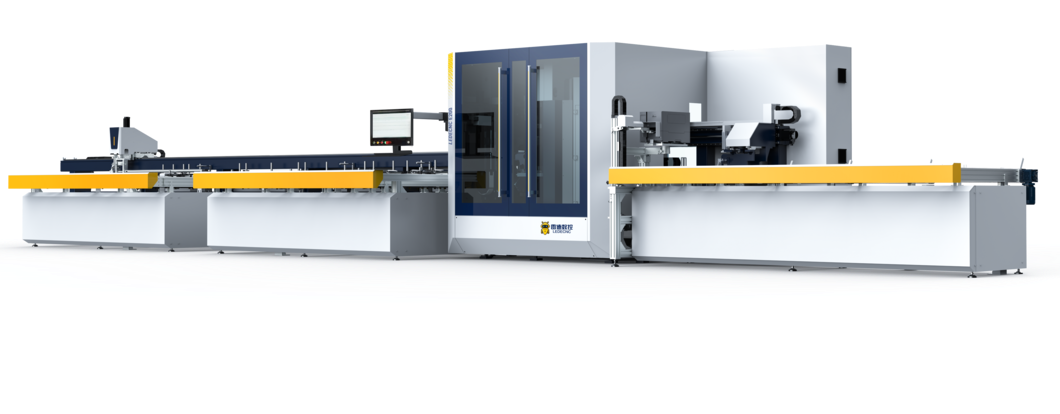
The absolute cornerstone of any automated facade production plant is a multi-axis CNC profile machining center. Unlike standard metalworking CNCs, an aluminum curtain wall machine engineered for profiles features an elongated machine bed designed to lock down oversized architectural extrusions.
4-Axis Centers: These units utilize an interpolating spindle that automatically rotates from 0℃ to 180℃, allowing the machine to drill, mill, and route three sides of a profile without requiring the operator to manually flip the heavy workpiece.
5-Axis Centers: For cutting-edge unitized facades featuring non-standard angles and complex pyramidal geometries, a 5-axis CNC provides continuous tool positioning along any 3D vector. This capability is critical for cutting complex end-notches, compound mitres, and specialized screw anchors.
Before any milling can begin, long structural extrusions must be cut down to exact dimensions. Automated double-head cutting saws utilize large-diameter, carbide-tipped saw blades (500 mm to 650 mm) that tilt automatically via CNC commands. This setup allows the system to execute precise compound mitre cuts on thick-walled perimeter transoms, ensuring flawless, watertight joints during final frame assembly.
Once the aluminum profiles are machined, automated corner-crimping machines apply high-pressure hydraulic alignment to link structural profiles together. This step ensures that the perimeter frames of unitized curtain wall modules maintain perfect squareness and structural shear strength before receiving structural silicone glazing.
Industrial Product Spotlight: To meet the heavy structural demands of modern facade engineering, LEADCNC offers a premium lineup of high-speed 4-axis and 5-axis aluminum machining centers. Engineered with massive X-axis travel strokes, these systems allow factories to process extra-long aluminum extrusions in a single setup, completely eliminating secondary positioning errors.
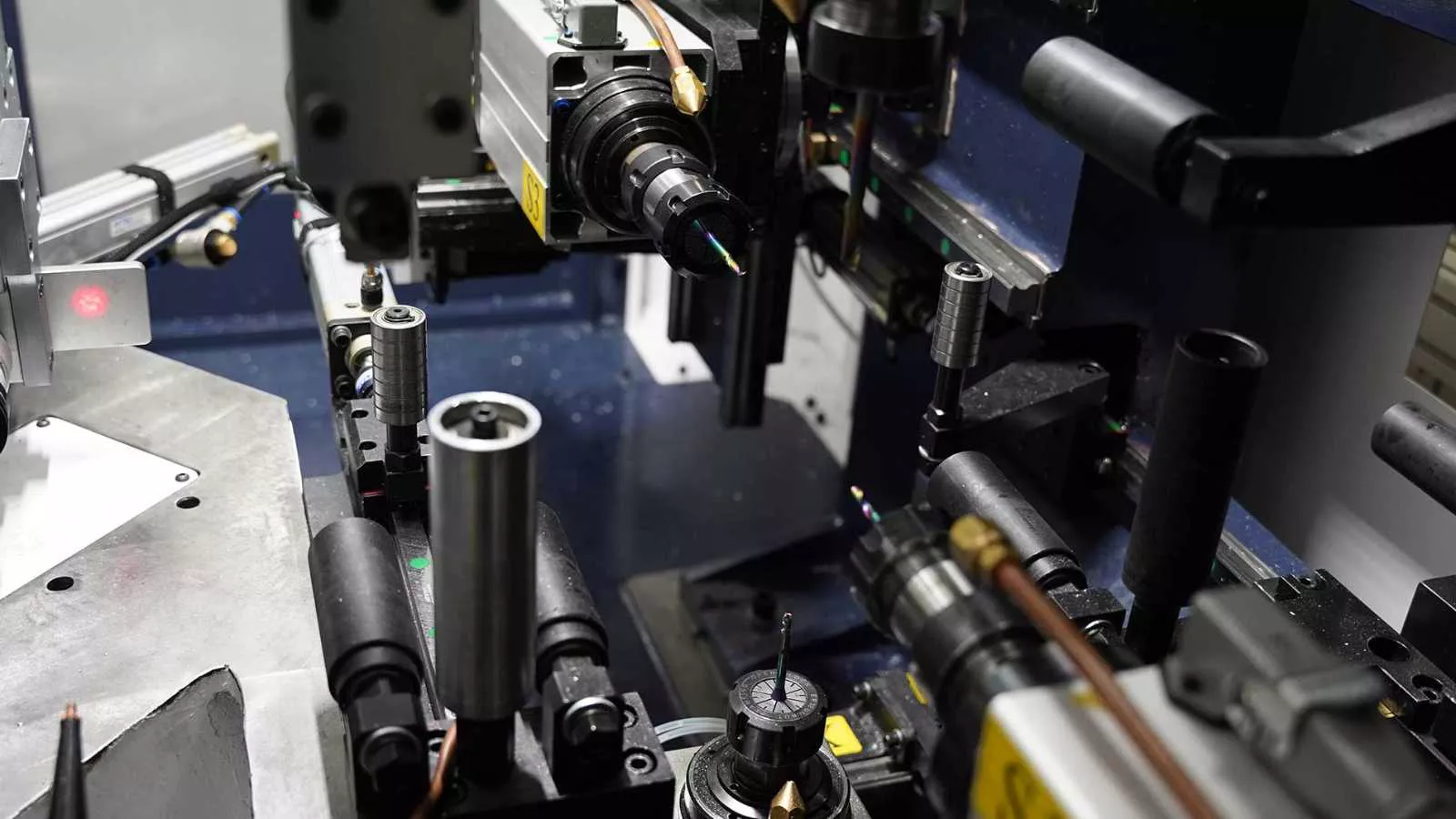
Investing in high-performance automation provides measurable improvements in a factory's operational efficiency and bottom-line profit margins.
Modern curtain wall profiles often incorporate internal thermal breaks, integrated gaskets, and complex interlocking channels. A professional aluminum curtain wall machine achieves structural tolerances within ±0.1 mm across extensive profile lengths. High-torque liquid-cooled spindles running at 18,000 R.P.M. to 24,000 R.P.M. ensure completely clean, burr-free cuts through tough aluminum alloys (such as 6063-T6), eliminating the need for secondary manual deburring before assembly.
By integrating a high-capability CNC profile center, a factory can compress its fabrication steps. A workflow that once required five separate workers—handling manual marking, standalone drilling, manual end-milling, bandsaw cutting, and final inspection—is reduced to a single operator managing a computerized system. The operator simply loads the profile, scans a barcode tied to the project’s data, and monitors the automated machining cycle.
Advanced machining centers feature direct software optimization. Material optimization programs analyze the required cutting list for the facade project and calculate the most efficient nesting layout along the raw aluminum bars. This software control minimizes off-cut scrap, keeping material waste below 2%, which significantly protects profit margins when purchasing high-grade aluminum extrusions.
Procurement managers and business owners should evaluate several core technical specifications before finalizing a machinery investment:
Spindle Power & Structural Rigidity: Thick architectural curtain wall sections require robust spindle configurations (typically 7.5 kW to 12 kW or higher) paired with a heavy, stress-relieved steel machine bed. A rigid structural base absorbs high-speed machining vibrations, ensuring long-term cutting accuracy over years of continuous operation.
Software Compatibility: A smart factory floor relies on smooth data workflows. The CNC system must integrate directly with specialized architectural facade software, such as Orgadata LogiKal or AutoCAD. This allows the engineering office to export step-by-step fabrication files directly to the machine floor, eliminating manual data entry errors.
Dynamic Clamping and Positioning Systems: Aluminum profiles can warp or deform if clamped incorrectly. Look for systems featuring automated pneumatic clamping systems that position themselves dynamically along the machine bed based on the program's toolpaths, preventing tool-to-clamp collisions while ensuring a secure hold.
After-Sales Engineering Support: Machine downtime can stall an entire construction project. Partnering with an established manufacturer that provides remote diagnostics, reliable global component availability, and direct factory technical training is critical for maintaining consistent operational uptime.
For curtain wall project decision-makers aiming to modernize their manufacturing assets, LEADCNC stands out as a premier global supplier of turnkey manufacturing solutions. By focusing entirely on high-precision, low-labor machinery design, they engineer equipment specifically optimized for heavy-duty industrial processing.
Advanced R&D and Heavy Structural Build Quality
Every LEADCNC aluminum curtain wall machine is built on a heavy-duty, stress-relieved chassis designed to withstand the constant dynamic loads of high-velocity machining. This rigid design preserves micron-level accuracy over decades of continuous factory operation, protecting your investment from long-term wear and alignment drift.
Turnkey Intelligent Line Capabilities
Rather than offering fragmented, standalone machinery components, LEADCNC provides comprehensive, integrated production setups. From heavy-duty double-head cutting saws to advanced 4-axis and 5-axis CNC machining centers, their machinery ecosystems share standardized control frameworks and software protocols, enabling seamless factory automation.
Proven B2B Return on Investment
By working directly with the factory group, international purchasing managers eliminate intermediate distributor markups. This direct-to-buyer framework allows facade engineering firms to secure elite-tier production capabilities at highly competitive capital expenditure rates, helping factories double their processing output while halving shop-floor labor costs.
As architectural designs continue to push boundaries with intricate geometric structures and demanding environmental standards, manual factory fabrication is no longer viable. Achieving success in the current facade engineering sector requires a commitment to automated production quality. Upgrading to a dedicated aluminum curtain wall machine allows production managers to eliminate manual layout errors, insulate their operations from skilled labor shortages, and deliver flawless project handovers on tight schedules.
Future-proofing your production floor begins with choosing an experienced manufacturing partner who understands the unique demands of high-volume architectural fabrication.
To review detailed equipment specifications, view live video demonstrations of our machinery in action, or request a customized production line layout and factory-direct quotation for your upcoming project pipeline, visit the official corporate portal at LEADCNC.
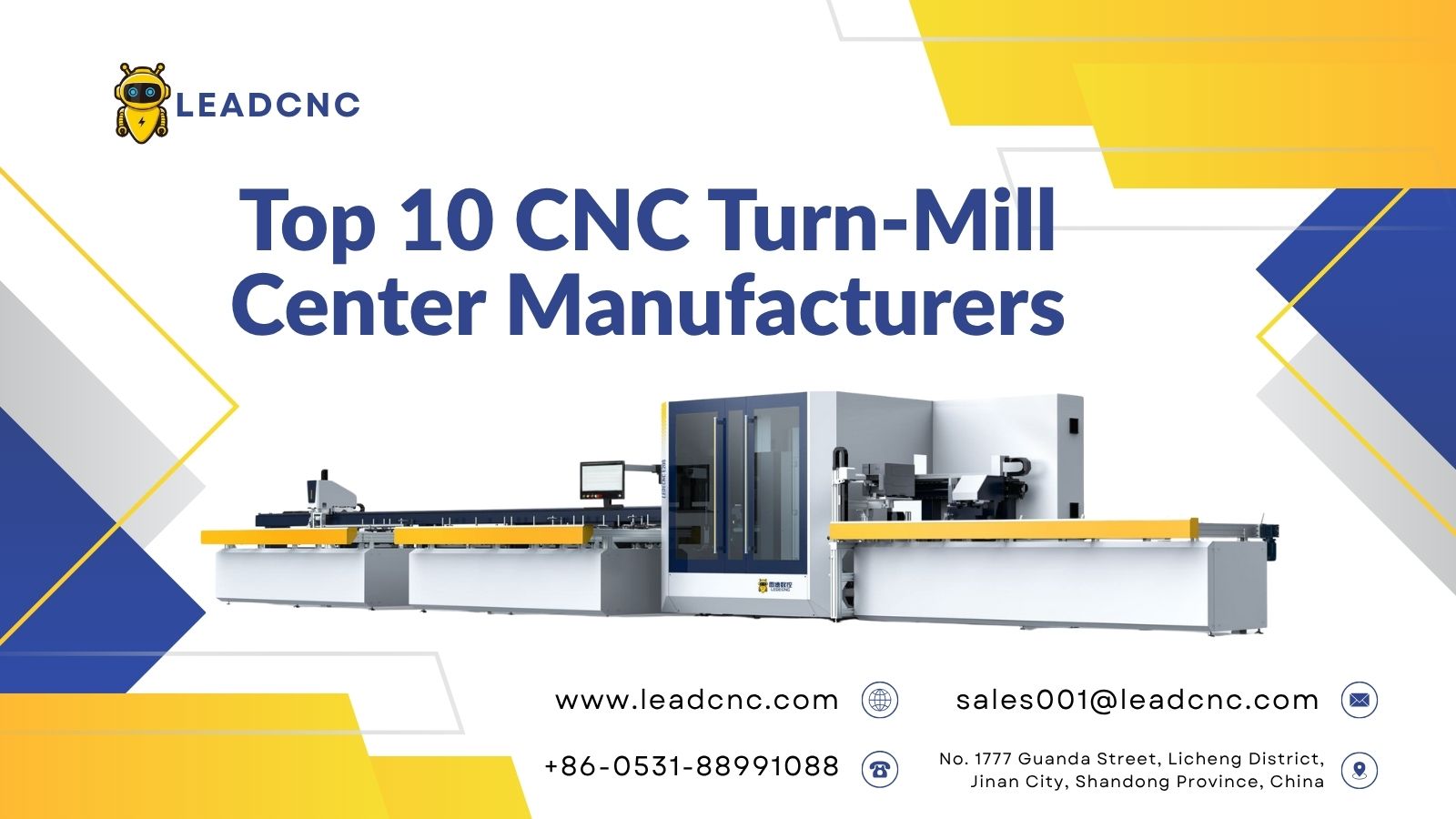

Discover the top 10 CNC turn-mill center manufacturers in 2026, featuring DMG Mori, Mazak, and more. Explore advanced automation, precision, and sustainability trends, with insights from LEADCNC, a leader in aluminum door and window production lines.
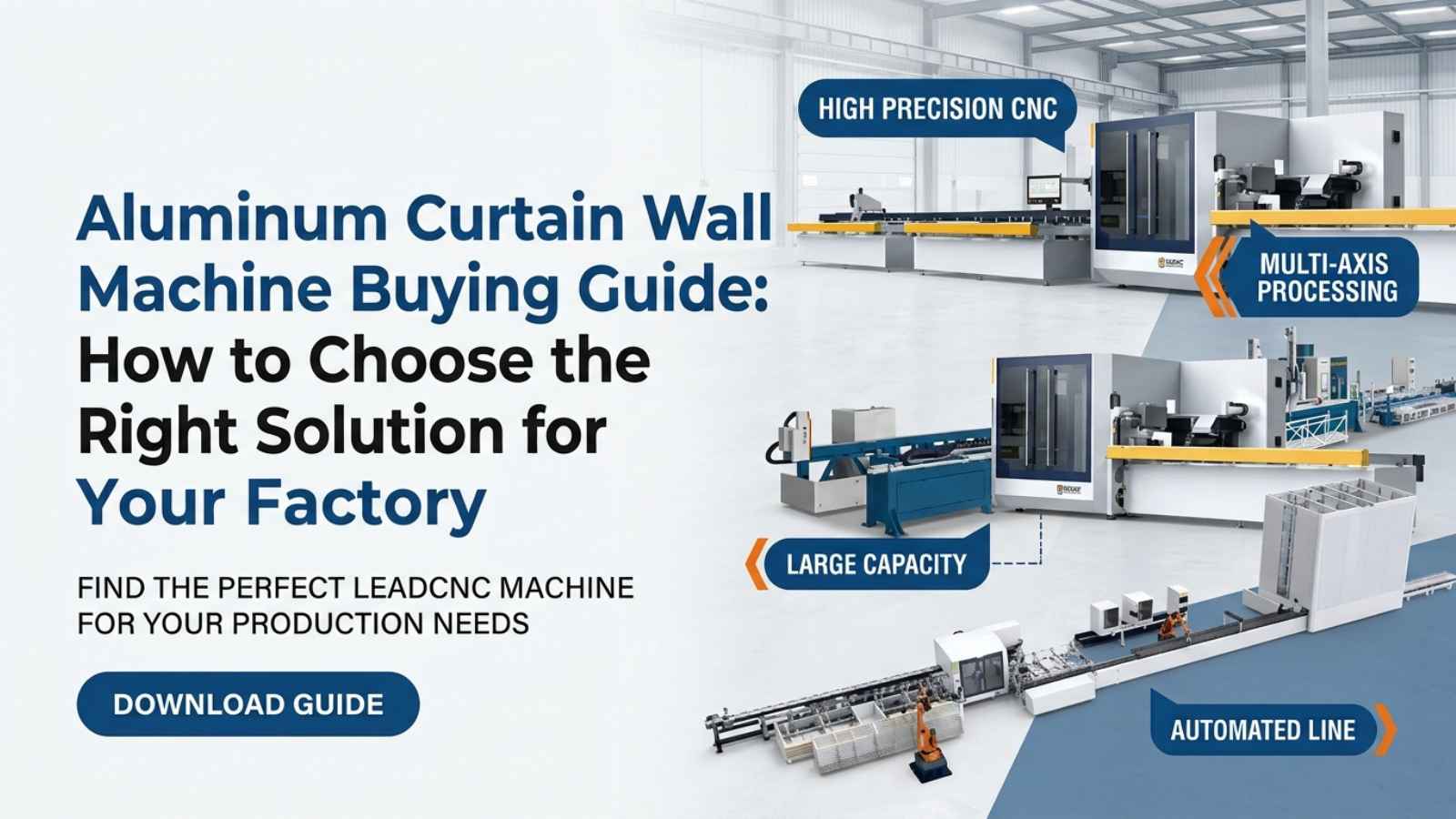
Looking for an aluminum curtain wall machine? Learn how to choose the right CNC curtain wall equipment, production line, and automation solution for your factory.

This guide will examine the shifting mechanics of the industry and detail the precise machinery configurations required to scale your commercial throughput.
Discover the top 10 CNC turning center lathe manufacturers in 2026, featuring detailed profiles, key specifications, and market insights for precision manufacturing.











.png)