


.png)

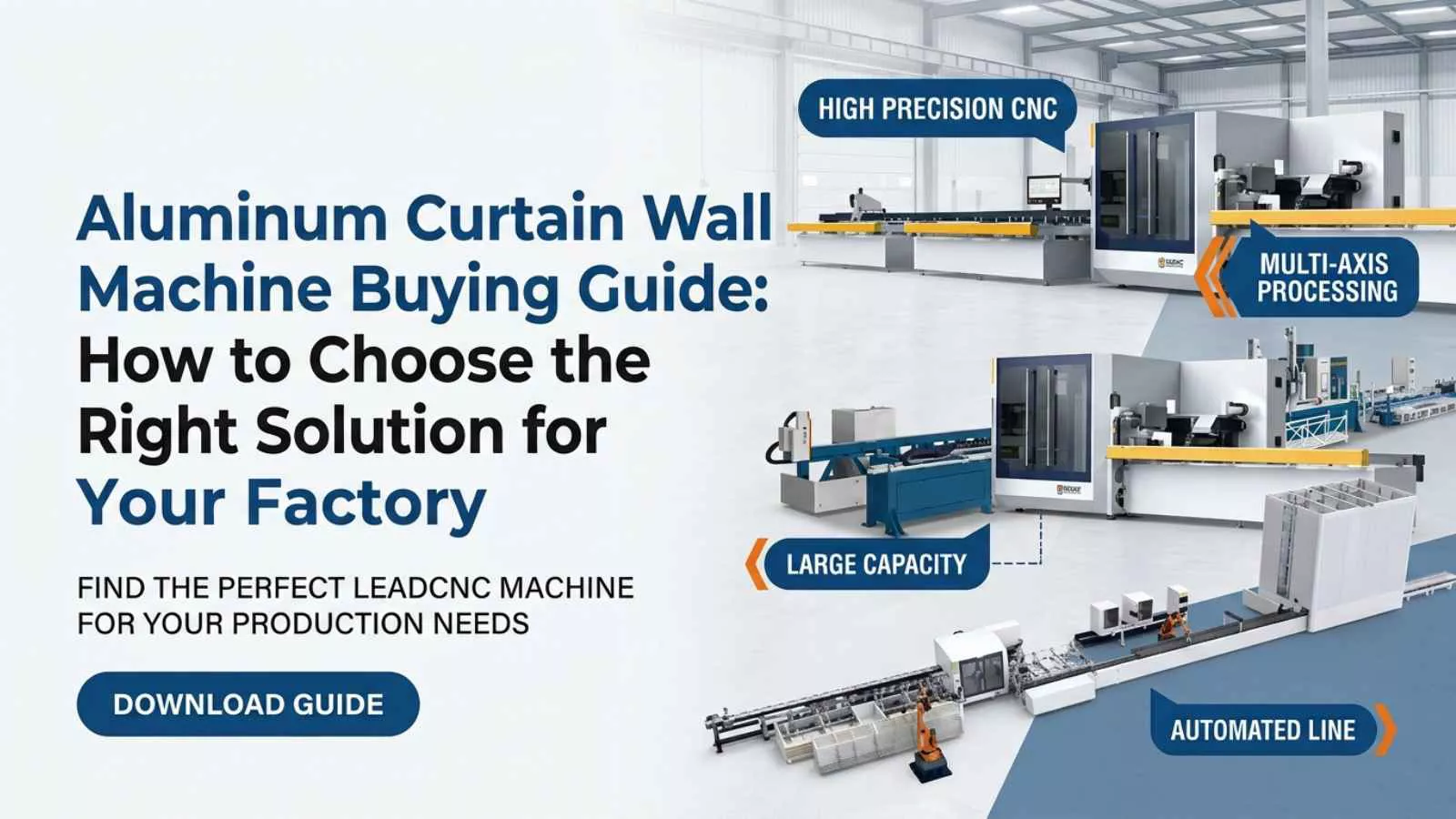
The demand for modern aluminum curtain wall systems continues to grow as architects and construction companies seek more efficient, durable, and visually attractive facade solutions. For curtain wall manufacturers, this growth also brings higher requirements for production accuracy, delivery speed, and manufacturing flexibility. An aluminum curtain wall machine has become an essential investment for companies that need to process aluminum profiles efficiently and maintain consistent product quality. Compared with traditional manual fabrication methods, CNC-based curtain wall equipment enables manufacturers to complete complex machining operations with higher precision and improved production efficiency. At LeadCNC, we help manufacturers select and implement the ideal equipment to match their exact production goals.
However, choosing the right machine is not simply a matter of selecting the most advanced model. Different manufacturers have different production requirements. A small facade workshop may need a flexible CNC machining center, while a large-scale curtain wall producer may require an automated production line capable of handling continuous production. Before investing in equipment, manufacturers should carefully evaluate: required production capacity, aluminum profile dimensions, machining complexity, automation requirements, long-term expansion plans, and supplier technical support. This guide explains the key factors manufacturers should consider when selecting an aluminum curtain wall machine and how to choose a solution that fits their production goals.
An aluminum curtain wall machine is specialized CNC equipment designed to process aluminum profiles used in building facade systems. Curtain wall manufacturing requires precise machining operations to prepare aluminum components for assembly, including cutting profiles according to project requirements, drilling connection holes, milling grooves and slots, processing profile ends, and performing customized machining tasks.
Unlike standard aluminum processing equipment, curtain wall machines are developed for larger profiles and more complex facade structures. They provide the accuracy and flexibility needed for commercial buildings, high-rise projects, and customized architectural designs. Modern curtain wall machines use CNC control systems to automate machining processes. After receiving programmed instructions, the machine can complete repeated operations with stable accuracy. For manufacturers, this provides several advantages: reduced dependence on manual measurement, more consistent machining results, faster production cycles, and easier management of customized projects. The right equipment allows manufacturers to improve production efficiency while maintaining the quality standards required by modern facade projects.
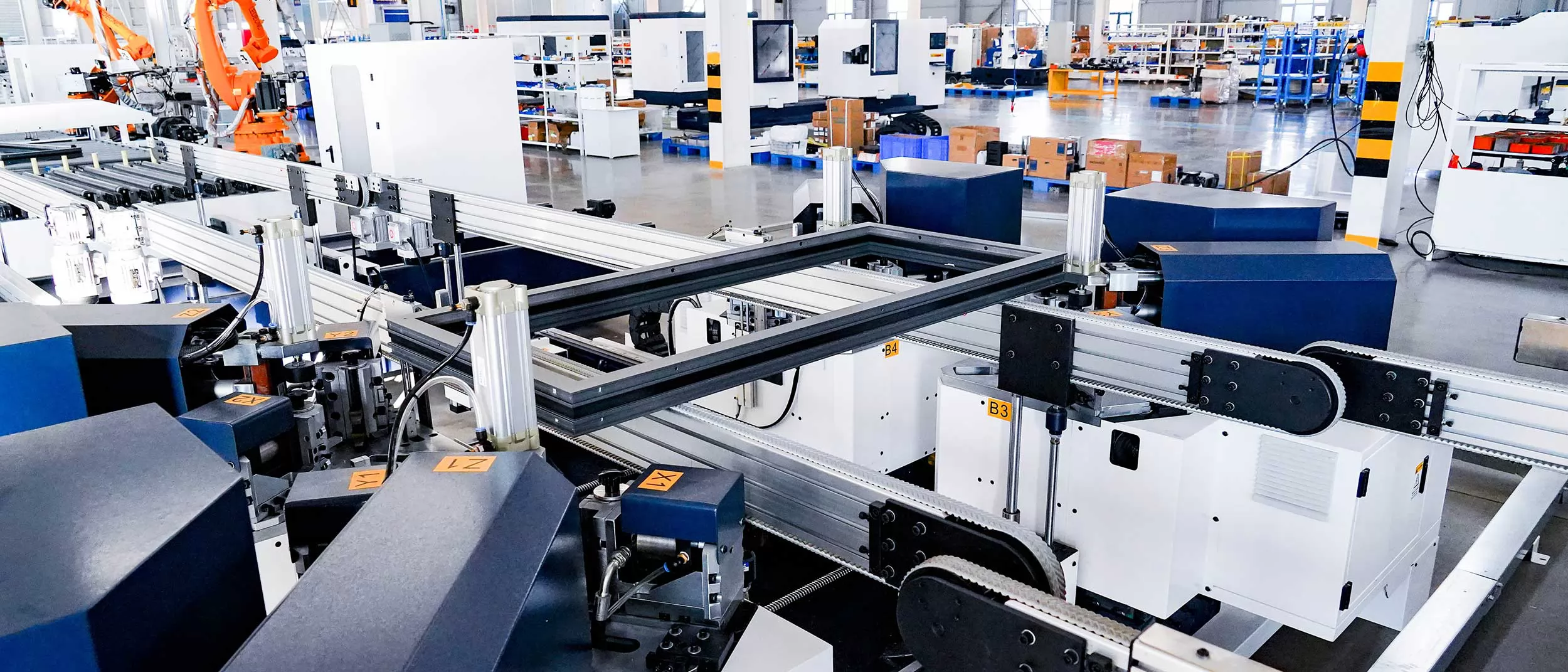
Although both curtain wall machines and window making machines process aluminum profiles, they are designed for different applications. Window making machines are mainly used for aluminum doors and windows, where profiles and machining requirements are generally more standardized. In contrast, curtain wall machines are designed for larger facade structures that require larger aluminum profiles, more complex machining operations, higher precision requirements, and greater production flexibility. If your factory focuses heavily on residential projects, exploring dedicated aluminum window and door processing equipment can help streamline standard frame fabrication alongside your curtain wall operations. For companies producing both windows and curtain walls, equipment selection should be based on the main production focus.
| Factor | Window Making Machine | Aluminum Curtain Wall Machine |
|---|---|---|
| Main Application | Aluminum doors and windows | Building facade systems |
| Profile Size | Smaller profiles | Larger structural profiles |
| Machining Complexity | Standard processing | Complex CNC machining |
| Typical Users | Window manufacturers | Curtain wall manufacturers |
As curtain wall projects become more complex, traditional manual fabrication methods face increasing limitations. Manufacturers need equipment that can deliver higher efficiency while maintaining stable quality. Automated aluminum curtain wall machines help companies improve production performance in several important areas.
One of the main advantages of automated curtain wall equipment is faster production. Traditional processing often requires workers to manually complete multiple steps, including measuring profiles, marking machining positions, drilling and cutting, checking dimensions, and transferring materials between machines. These processes take time and depend heavily on operator experience.
CNC curtain wall machines reduce unnecessary manual operations by completing machining tasks according to programmed instructions. This improves workflow efficiency and allows manufacturers to process more components within a shorter production cycle. Higher efficiency helps manufacturers complete projects faster, increase production capacity, improve delivery reliability, and handle larger customer orders. For companies competing in the commercial facade market, production speed can directly influence business opportunities.
Precision is critical in curtain wall manufacturing. Aluminum components must fit together accurately during installation. Even small machining errors can affect assembly efficiency, installation quality, and overall facade appearance. Manual processing may create variations due to operator differences or measurement errors. An aluminum curtain wall machine uses CNC positioning and automated control to maintain consistent machining accuracy. This helps manufacturers achieve stable product quality, repeatable production results, reduced human error, and better project consistency. For large curtain wall projects, reliable accuracy is essential for meeting customer expectations.
Skilled workers play an important role in traditional aluminum fabrication. However, finding and retaining experienced operators has become increasingly difficult for many manufacturers. Automated curtain wall machines reduce the amount of repetitive manual work required during production. Operators can focus on machine setup, production monitoring, quality inspection, and process management. Instead of relying entirely on manual skills, manufacturers can build a more stable production system, allowing companies to improve workforce efficiency, reduce training pressure, support production expansion, and maintain consistent output.
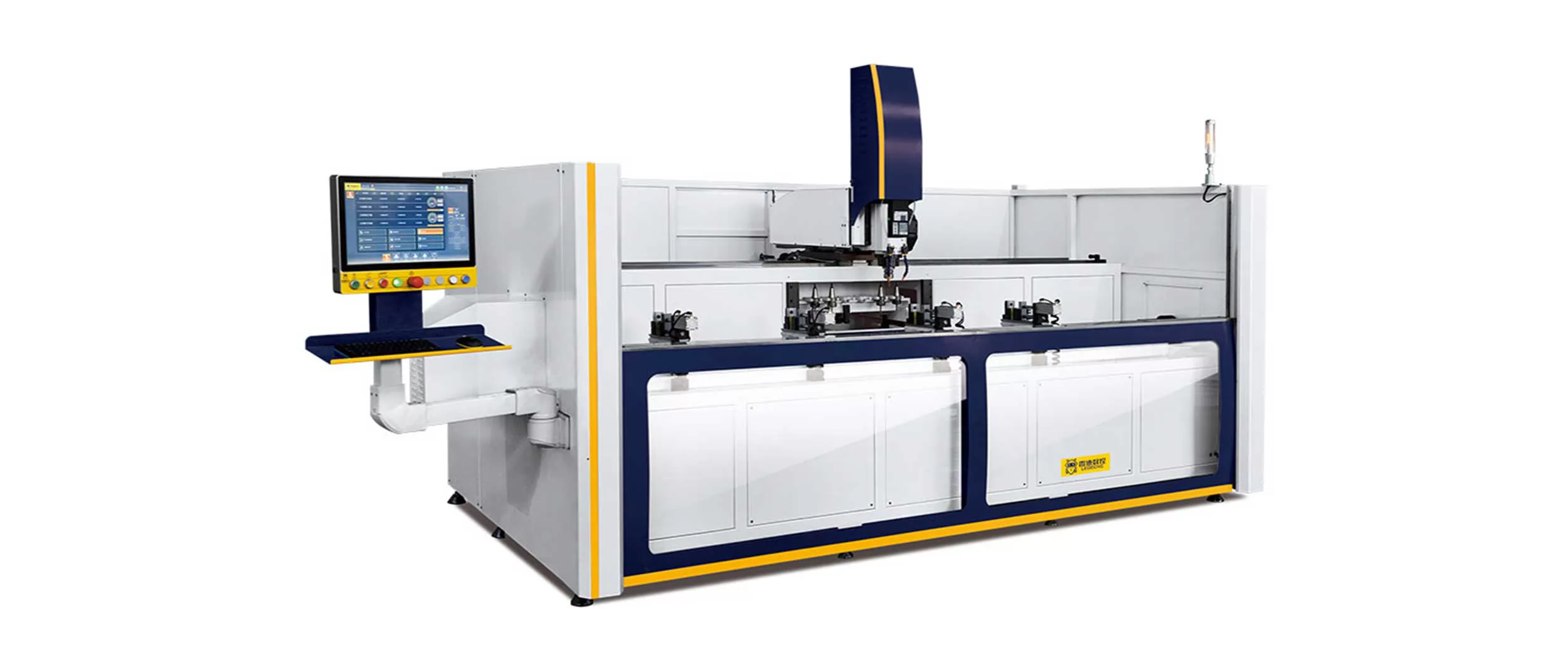
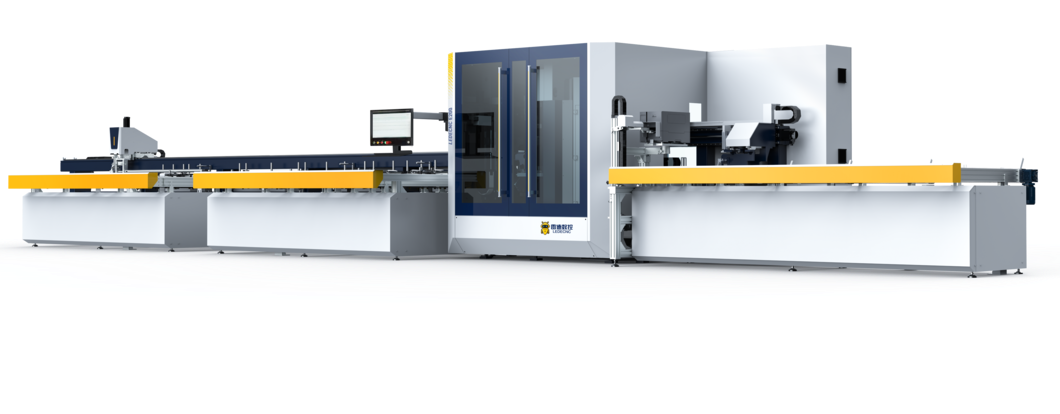
Before purchasing an aluminum curtain wall machine, manufacturers should understand the differences between available equipment solutions. The best choice depends on production volume, project complexity, and the level of automation required. Generally, curtain wall processing equipment can be divided into three main categories: CNC aluminum curtain wall machining centers, automated aluminum curtain wall production lines, and five-axis aluminum curtain wall processing centers.
A CNC aluminum curtain wall machining center is a flexible solution for manufacturers that require accurate profile processing with different project requirements. These machines combine multiple machining functions, such as drilling, milling, cutting preparation, slot processing, and profile positioning. Compared with traditional standalone machines, CNC machining centers reduce manual handling and provide more stable processing results. They are suitable for small and medium curtain wall manufacturers, customized facade producers, and companies upgrading from manual fabrication. The main advantage is flexibility; manufacturers can adjust machining programs according to different curtain wall designs without changing the entire production process.
For manufacturers with higher production requirements, an automated aluminum curtain wall production line provides a more integrated solution. Unlike individual machines, a production line connects multiple machining processes into one workflow, including material feeding, cutting, drilling, milling, profile transfer, and intelligent positioning. This reduces unnecessary manual movement between different production stages and improves overall efficiency. Automated production lines are especially suitable for large curtain wall manufacturers, unitized curtain wall production, and high-volume facade projects. To optimize high-volume fabrication, integrating an automated aluminum facade and curtain wall production line ensures seamless material flow and maximum throughput.
Some architectural projects require more complex aluminum structures and customized facade designs. In these cases, a five-axis aluminum curtain wall processing center can provide greater machining flexibility. Compared with standard CNC equipment, five-axis systems allow more advanced tool movement and reduce the need for repeated repositioning. Key advantages include the processing of complex aluminum structures, higher machining flexibility, better accuracy for customized components, and improved production efficiency for advanced projects. Implementing a high-precision five-axis curtain wall machining center allows plants to execute intricate architectural cuts without sacrificing tolerances.
Selecting the right aluminum curtain wall machine requires manufacturers to evaluate their actual production needs instead of focusing only on machine specifications. A suitable machine should match current production requirements while supporting future business growth.
The first step is understanding your factory’s production situation. Manufacturers should consider daily or monthly production volume, types of curtain wall systems produced, project complexity, and expected future growth. For example, a company producing customized facade components may prioritize flexibility, while a large manufacturer handling commercial projects may need higher automation and production capacity. Choosing equipment based only on initial cost may create limitations later; a machine should provide enough capability to support future production expansion.
Processing capability is one of the most important factors when selecting equipment. Curtain wall systems often use large aluminum profiles with different sizes and structures. Manufacturers should confirm whether the machine can handle their required materials. Important considerations include profile dimensions (maximum profile size, processing length, material thickness capability) and machining functions (cutting, drilling, milling, slotting, end processing, and customized machining). A machine with suitable functions can reduce dependence on additional equipment and improve workflow efficiency.
The CNC axis configuration directly affects machining flexibility.
| CNC Axis | Suitable Application |
|---|---|
| 3-axis | Standard aluminum profile processing |
| 4-axis | More flexible machining requirements |
| 5-axis | Complex facade structures |
Three-axis systems are suitable for basic curtain wall processing where machining requirements are relatively straightforward, ideal for manufacturers seeking reliable processing capability with controlled investment costs. Four-axis systems provide additional flexibility for manufacturers that need more advanced machining capability while maintaining reasonable investment levels, suitable for companies producing different profile structures and customized projects. Five-axis systems are designed for complex machining requirements, suitable for high-end commercial facades, complex architectural designs, and customized aluminum structures. Although the investment is higher, five-axis technology provides greater flexibility for companies competing in demanding markets.
Automation level should match the factory’s production scale and business goals. Semi-automatic solutions are suitable for smaller manufacturers, flexible production environments, and companies gradually upgrading from manual processing. Fully automated solutions are ideal for large-scale production, high-volume manufacturing, and smart factory development. Automated systems can reduce manual operations, improve production consistency, and help manufacturers achieve long-term efficiency improvements.
Purchasing an aluminum curtain wall machine is a long-term investment, so manufacturers should evaluate not only the equipment itself but also the supplier’s technical capability and service support. A reliable supplier should understand curtain wall manufacturing requirements and provide solutions based on actual production conditions. Important factors include industry experience, equipment customization capability, installation support, operator training, maintenance service, and spare parts availability. A supplier with strong engineering experience can help manufacturers select a suitable machine configuration instead of simply providing standard equipment. Proper installation and training are also essential to maintain stable production and maximize investment value.
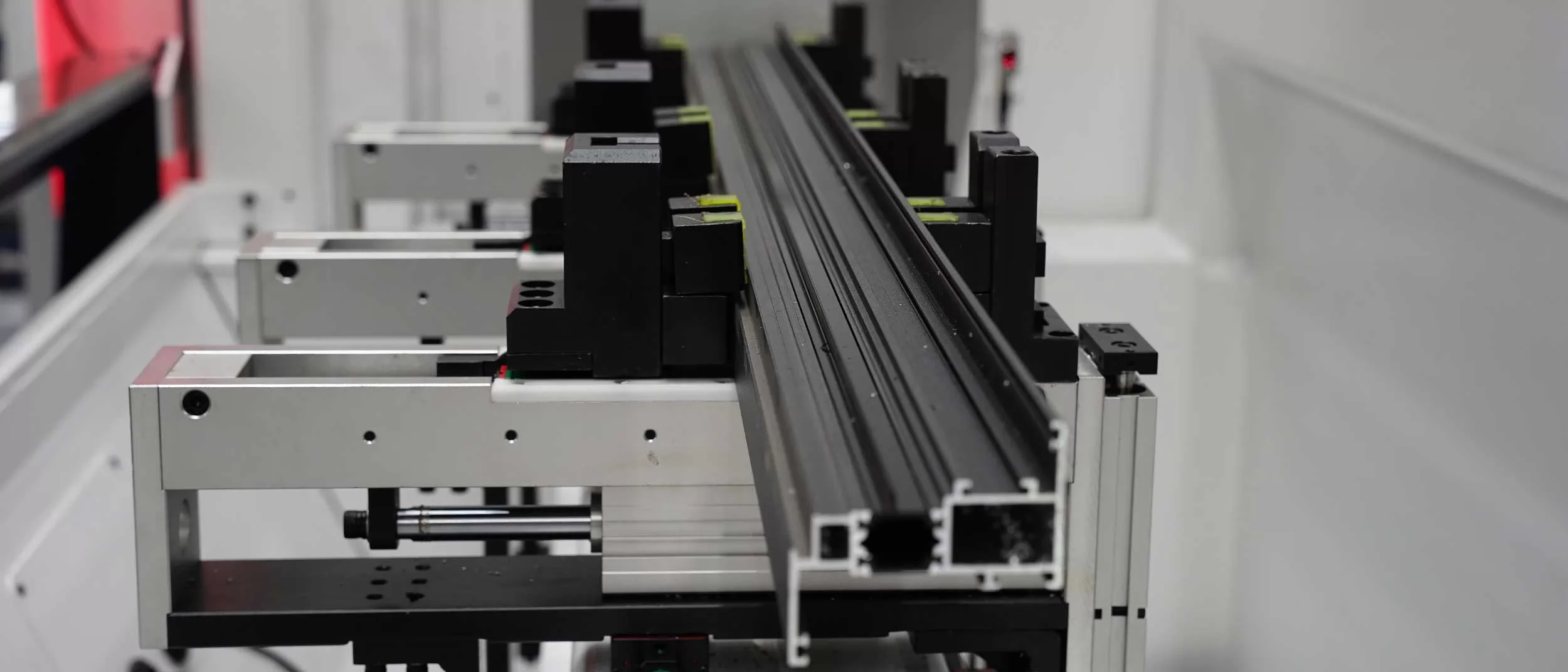
Traditional curtain wall fabrication relies heavily on manual operations. While experienced workers can produce high-quality components, manual methods become more challenging as production requirements increase. Modern aluminum curtain wall machines provide manufacturers with a more efficient and scalable production approach.
| Factor | Traditional Fabrication | Aluminum Curtain Wall Machine |
|---|---|---|
| Labor Requirement | High dependence on skilled workers | Reduced manual operations |
| Accuracy | Operator-dependent | CNC-controlled precision |
| Production Efficiency | Limited by manual processes | Faster machining cycles |
| Consistency | May vary between operators | Stable repeatability |
| Material Usage | Higher waste risk | Optimized processing |
| Production Expansion | Requires more labor | Easier capacity improvement |
Manual fabrication usually requires workers to complete multiple individual steps, including measuring, positioning, drilling, and cutting. This approach can become inefficient when manufacturers handle large orders or complex projects. An aluminum curtain wall machine integrates machining processes into a controlled workflow, reducing production time and improving overall efficiency. Furthermore, CNC-controlled equipment reduces variation by following programmed machining parameters, allowing manufacturers to maintain consistent quality across production batches. As curtain wall businesses grow, automated machining solutions provide a scalable approach by improving efficiency without relying only on additional labor.
Choosing the right equipment supplier plays an important role in improving manufacturing performance. LeadCNC focuses on CNC solutions for aluminum facade and curtain wall production, helping manufacturers improve machining efficiency, accuracy, and automation levels.
Modern curtain wall production requires more than individual machines; manufacturers increasingly need integrated systems. LeadCNC provides complete setups, such as a complete curtain wall production solution designed to unify processes from cutting to profile positioning. Additionally, for facilities demanding top-tier multi-axis precision, adopting an advanced five-axis aluminum processing center provides the extra capability needed for complex geometrical profiles. By selecting equipment based on actual production needs, companies can build a more efficient and competitive manufacturing operation.
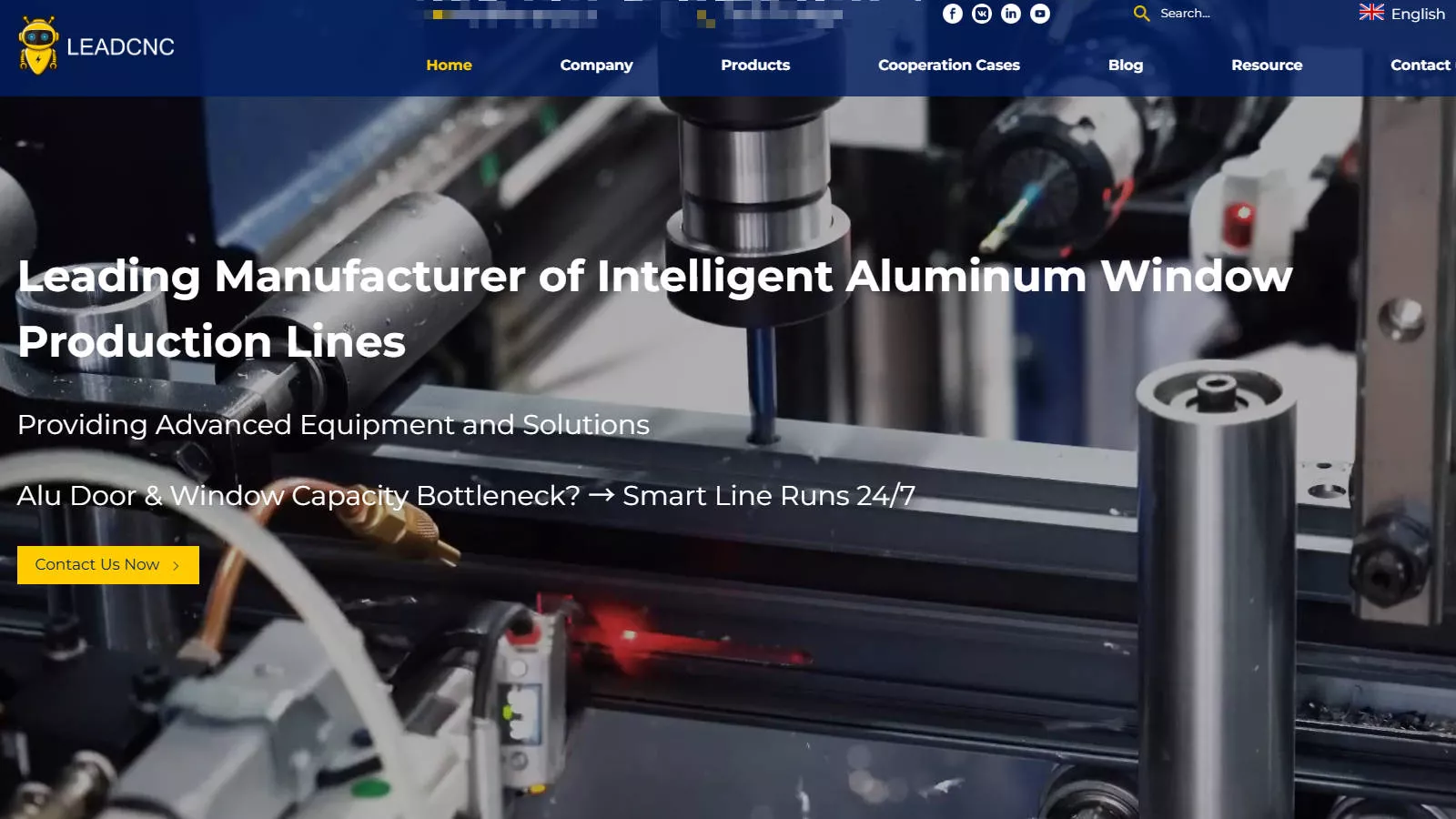
Selecting the right aluminum curtain wall machine is an important decision for manufacturers seeking higher efficiency, stable quality, and long-term production growth. The ideal solution should match the factory’s actual requirements, including production volume, aluminum profile specifications, machining complexity, and automation goals. From CNC machining centers to automated production lines and advanced five-axis processing equipment, modern curtain wall solutions provide manufacturers with more efficient ways to meet the growing demands of facade manufacturing. By choosing suitable equipment and working with an experienced supplier like LeadCNC, manufacturers can improve production performance and build a more competitive manufacturing operation.
Ready to upgrade your facade production? Trust LeadCNC—where expertise meets innovation.

Discover the top 10 CNC turn-mill center manufacturers in 2026, featuring DMG Mori, Mazak, and more. Explore advanced automation, precision, and sustainability trends, with insights from LEADCNC, a leader in aluminum door and window production lines.
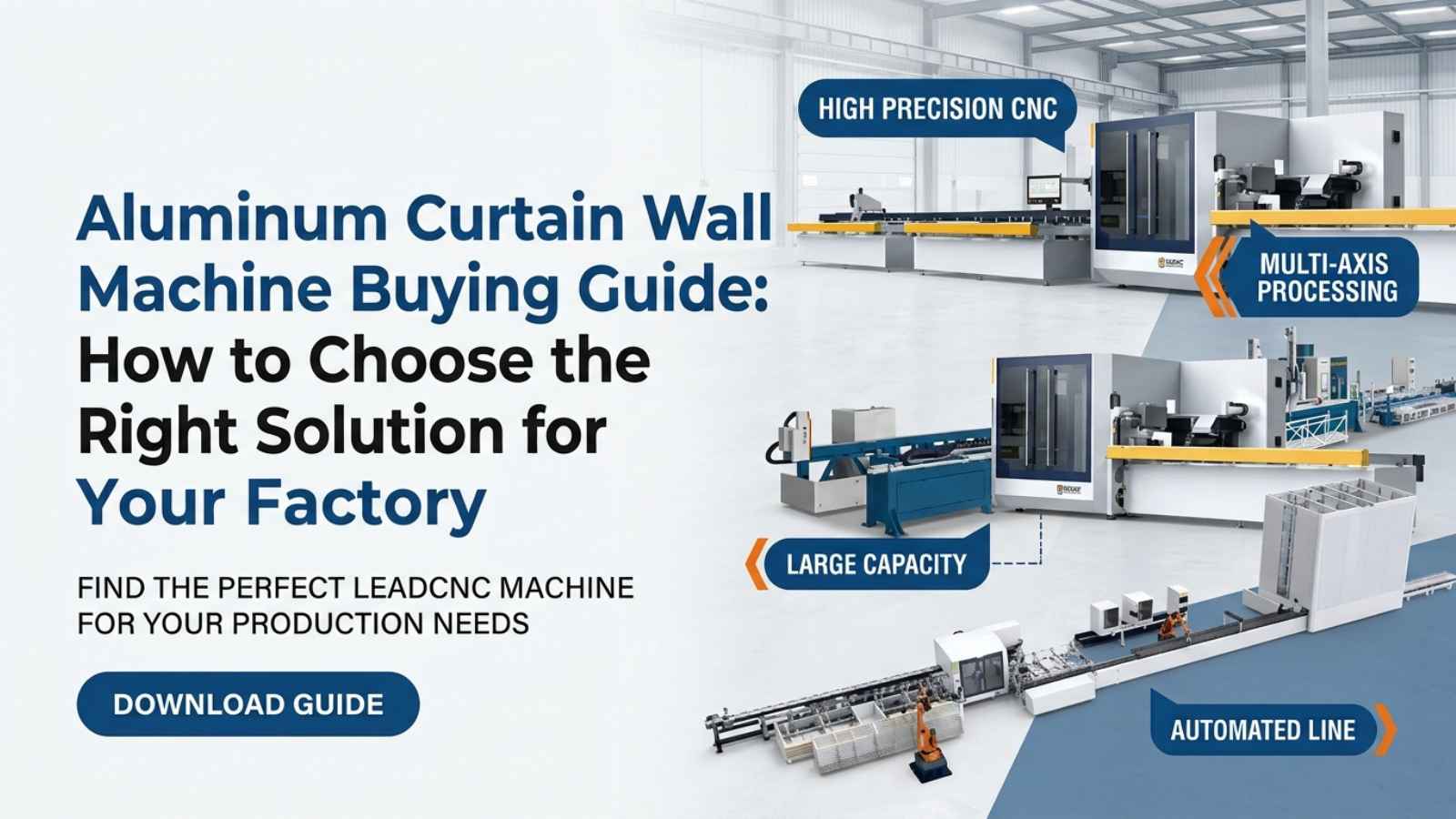
Looking for an aluminum curtain wall machine? Learn how to choose the right CNC curtain wall equipment, production line, and automation solution for your factory.

This guide will examine the shifting mechanics of the industry and detail the precise machinery configurations required to scale your commercial throughput.
Discover the top 10 CNC turning center lathe manufacturers in 2026, featuring detailed profiles, key specifications, and market insights for precision manufacturing.











.png)