












_1794969520_WNo_1600d900.webp)
Machining centres for doors and windows are specialized CNC machines designed to process aluminum profiles and other window and door materials with consistent accuracy. Depending on the machine configuration, they can perform operations such as milling, drilling, tapping, slotting, end machining, and the production of hardware and drainage openings. By combining multiple machining processes in one setup, these machines help manufacturers improve dimensional consistency, reduce manual handling, and support more efficient profile production.
Choosing the right machining centre for doors and windows requires more than comparing machine prices or axis configurations. Buyers need to consider profile dimensions, machining operations, required accuracy, production volume, tooling arrangements, software compatibility, and the level of automation. A 3-axis machine may be sufficient for straightforward operations, while complex profiles and multi-face machining may require a 4-axis or 5-axis configuration. This guide explains the main types of door and window machining centres, their applications, key technical features, and practical selection factors for manufacturers.
- What Are Machining Centres for Doors and Windows?
- What Are the Main Types of Door and Window Machining Centres?
- 3-Axis CNC Machining Centres
- 4-Axis CNC Machining Centres
- 5-Axis CNC Machining Centres
- What Operations Can a Door and Window Machining Centre Perform?
- Applications in Aluminum Door and Window Production
- Key Components and Technical Features
- Automation and Intelligent Production Lines
- How to Compare Different Machining Centres
- How to Choose the Right Machining Centre for Doors and Windows
- Maintenance and Operating Considerations
- FAQs About Machining Centres for Doors and Windows
- Conclusion
1. What Are Machining Centres for Doors and Windows?
A machining centre for doors and windows is a CNC-controlled machine used to process profiles and components during the manufacture of window and door systems. In aluminum fabrication, the machine typically handles extruded aluminum profiles that need to be cut, drilled, milled, slotted, or machined to accommodate locks, hinges, handles, drainage channels, connectors, and other hardware.
Unlike a conventional single-purpose drilling or milling machine, a CNC machining centre can execute multiple programmed operations with limited manual repositioning. The operator loads the profile, selects or imports the machining program, and allows the CNC system to coordinate the relevant axes, spindle movements, and tooling. Depending on the machine design, the profile may be clamped in position while the machining unit moves, or the workpiece may be repositioned to reach different surfaces.
Machining centres for doors and windows are particularly useful when manufacturers need repeatable machining results across different profile sizes and product designs. They can support standard window and door production as well as customized projects involving different opening styles, frame structures, and hardware configurations.
1.1 How a CNC Machining Centre Works
The machining process begins with a digital profile drawing or machining program. The CNC controller interprets the programmed coordinates and instructions, then controls the movement of the machine axes and spindle. The workpiece is positioned and secured by clamps before the selected cutting tool performs the required operation.
Depending on the machine configuration, automatic tool changing may allow several operations to be completed without manually replacing each tool. Sensors, positioning systems, and software functions help coordinate machining movements and improve process consistency.
1.2 Machining Centre vs. Conventional Profile Processing Equipment
| Comparison Factor | Conventional Processing Equipment | CNC Machining Centre |
|---|---|---|
| Operation | Often designed for one or a limited number of specific operations. | Can combine multiple programmed machining operations. |
| Positioning | May require more manual positioning and adjustment. | Uses CNC-controlled positioning and programmed coordinates. |
| Product changes | May require manual setup changes for different profiles. | Can process different programs within the machine's supported range. |
| Machining consistency | Depends heavily on operator positioning and setup. | Supports repeatable machining when programs and setups are correct. |
| Automation | Usually requires more direct operator involvement. | May support automatic tool changing, program management, and production-line integration. |
| Best suited for | Dedicated operations and simpler production requirements. | Manufacturers processing varied profiles and multiple machining features. |
2. What Are the Main Types of Door and Window Machining Centres?
Door and window machining centres can be classified by the number of controlled axes, the arrangement of the machining unit, the type of workpiece handling, and the level of automation. For aluminum profile processing, 3-axis, 4-axis, and 5-axis CNC machining centres are common configurations to consider.
2.1 Classification by Number of Axes
The number of axes indicates how the machine can move its machining unit or workpiece. More axes can provide access to additional profile surfaces and machining angles, but the best choice depends on the actual operations required.
- 3-axis machining centre: Performs machining movements along three linear axes and is suitable for many standard drilling and milling tasks.
- 4-axis machining centre: Adds a rotary or positioning axis, allowing the machining unit or workpiece to reach additional surfaces or angles.
- 5-axis machining centre: Uses two additional rotary or tilting movements alongside the three linear axes, supporting more complex multi-face machining.
2.2 Classification by Machine Configuration
Machining centres may also differ in their working arrangement. Some use a fixed worktable with a moving machining head, while others incorporate profile positioning or additional clamping arrangements. Long-profile machines may be designed with extended working lengths and multiple clamping positions.
The configuration affects the maximum profile length, machining access, loading method, floor-space requirements, and suitability for different production tasks. Buyers should evaluate the machine layout against the dimensions and geometry of the profiles they manufacture.
2.3 Classification by Automation Level
Some machining centres are operated as standalone machines, with operators loading and unloading each profile. More advanced configurations may include automatic tool changing, multiple clamping zones, barcode or program identification, and connections to upstream or downstream production equipment.
For manufacturers with higher output requirements, a machining centre can also be integrated into a broader aluminum window and door production line. The objective is to coordinate material handling and processing steps rather than simply increase the speed of one individual machine.
| Machine Type | Typical Capability | Common Application |
|---|---|---|
| 3-axis CNC machining centre | Three-direction linear machining movements. | Standard drilling, milling, and profile processing. |
| 4-axis CNC machining centre | Three linear axes plus an additional rotary or positioning axis. | Machining additional profile faces and more varied geometries. |
| 5-axis CNC machining centre | Three linear axes plus two rotary or tilting axes. | Complex angles, multi-face machining, and intricate profile features. |
| Automated machining line | Coordinated machining and material handling across multiple stations. | Higher-volume production and integrated factory workflows. |
The axis count alone does not determine the quality or productivity of a machine. Spindle performance, clamping design, positioning accuracy, software, tooling, and the operator's ability to prepare correct machining programs are also important.
3. 3-Axis CNC Machining Centres
A 3-axis CNC machining centre uses three linear axes, commonly identified as X, Y, and Z. These axes control movement along the machine's longitudinal, transverse, and vertical directions. This arrangement is suitable for many standard machining operations on aluminum door and window profiles.
3.1 Main Features of a 3-Axis Machine
The basic 3-axis configuration provides controlled movement for drilling, milling, and other operations that can be completed from the accessible machining direction. Depending on the machine's design, the operator can position the profile and clamp it securely while the spindle performs the programmed operation.
For manufacturers producing common aluminum window and door profiles, a 3-axis machine may offer a practical balance between machining capability, equipment complexity, and investment cost. It can be especially suitable when most machining features are located on surfaces that can be reached without additional rotary positioning.
3.2 Common Applications
- Drilling installation and connection holes.
- Milling slots and openings in aluminum profiles.
- Machining selected hardware mounting positions.
- Processing drainage and ventilation openings where supported by the machine configuration.
- Performing routine profile machining for standard window and door designs.
3.3 Advantages and Limitations
A 3-axis machining centre generally has a simpler movement arrangement than a multi-axis machine. This can make setup, programming, and routine operation more straightforward for manufacturers whose machining requirements are relatively consistent.
However, a standard 3-axis configuration may require the operator to reposition the profile or use additional fixtures when machining multiple sides or complex angles. If the product range includes frequent multi-face machining, a 4-axis or 5-axis machine may reduce the need for repeated manual repositioning.
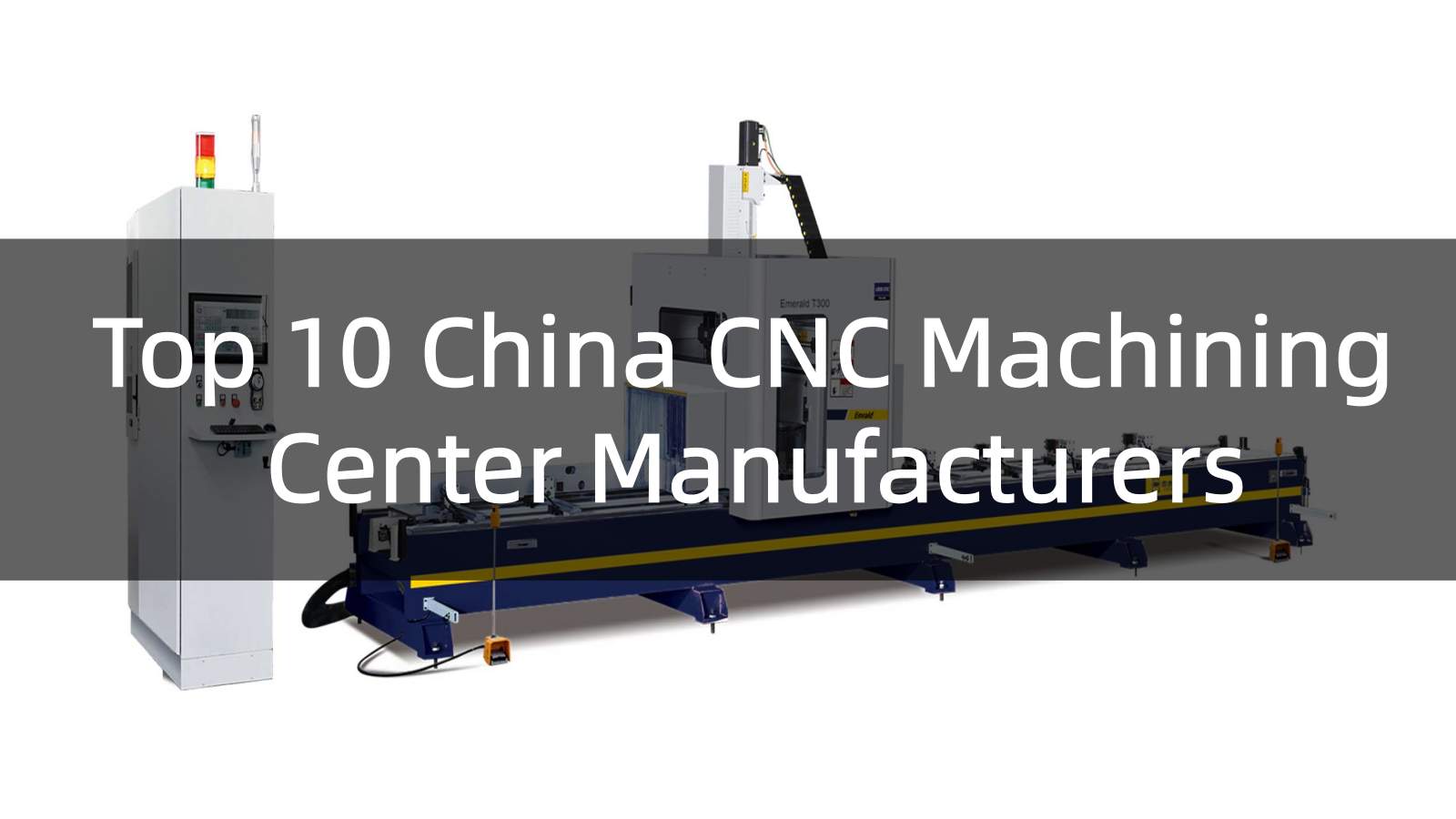
LEADCNC's aluminum window and door machinery range includes the Emerald T300 3-Axis CNC Machining Center. Buyers can review the product information and confirm its working range, machining functions, and configuration against their own profile requirements.
4. 4-Axis CNC Machining Centres
A 4-axis CNC machining centre combines three linear axes with an additional rotary or positioning axis. This extra movement allows the machine to access more surfaces or machining angles without requiring the operator to manually reposition the profile for every operation.
4.1 How the Fourth Axis Works
The fourth axis is typically used to rotate or reposition the workpiece or machining unit. Its exact arrangement depends on the machine design. By changing the machining orientation under CNC control, the machine can process selected profile surfaces that would be difficult to reach using a basic 3-axis configuration.
This capability can be useful when aluminum profiles require machining on multiple faces. For example, a profile may need a combination of holes, slots, and hardware openings at different positions. A suitable 4-axis configuration can help reduce manual handling and improve the consistency of repeated machining sequences.
4.2 Common Applications
- Machining multiple sides of aluminum window and door profiles.
- Processing holes and slots at different orientations.
- Milling hardware openings and selected connection features.
- Performing more complex operations on profiles with varied cross-sections.
- Reducing manual repositioning for suitable multi-face machining tasks.
4.3 Advantages of a 4-Axis Configuration
The main advantage of a 4-axis machining centre is its additional machining access. When a job requires several operations at different angles, the fourth axis may allow more of the process to be completed in one setup. This can reduce handling time and help maintain the relationship between machining features.
For manufacturers handling a mixture of standard and customized aluminum window and door profiles, a 4-axis machine can provide more flexibility than a basic 3-axis model. However, the actual benefit depends on the machine's rotary range, clamping arrangement, tool access, and programming functions.
4.4 LEADCNC Emerald F260 4-Axis CNC Machining Center
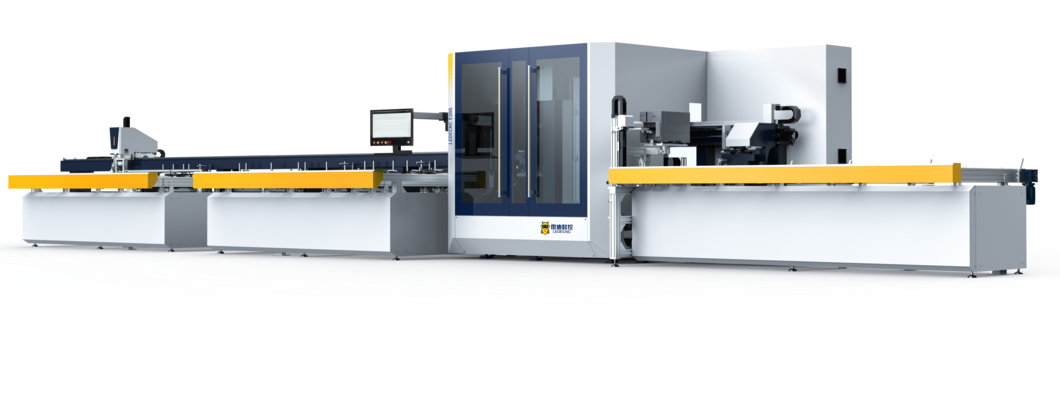
LEADCNC offers the Emerald F260 4-Axis CNC Machining Center as part of its aluminum window and door machinery range. The product is positioned for machining aluminum and light-alloy profiles and can be used for operations such as installation holes, drainage holes, lock holes, shaped openings, and end milling, depending on the machine configuration and tooling.
For buyers comparing 4-axis equipment, the Emerald F260 is a model worth reviewing when the production process involves several machining features on aluminum profiles. Before selecting the machine, confirm the supported profile dimensions, machining range, spindle specifications, axis movement, clamping arrangement, and compatible software.
More information is available through the LEADCNC window-making machine category.

5. 5-Axis CNC Machining Centres
A 5-axis CNC machining centre combines three linear axes with two rotary or tilting axes. This arrangement provides greater freedom for positioning the tool or workpiece and can support machining from multiple directions. It is particularly useful for complex components and profiles that require more advanced machining access.
5.1 How 5-Axis Machining Works
The three linear axes control movement along the main directions, while the two additional axes provide rotary or tilting movement. Together, these movements allow the cutting tool to approach a workpiece from different orientations.
In aluminum door and window production, the need for a 5-axis machine depends on the complexity of the profile and the machining operations. Some manufacturers may benefit from this configuration when processing special profile geometries, complex angles, or components that require machining on several faces.
5.2 Typical Applications
- Machining complex profile geometries and angled features.
- Processing multiple surfaces with fewer manual setup changes.
- Machining customized components with demanding access requirements.
- Producing specialized openings and contours where supported by the tooling and program.
- Handling advanced profile machining tasks beyond the practical range of simpler configurations.
5.3 Benefits and Considerations
A 5-axis machine can provide extensive machining flexibility, but it also introduces greater mechanical and programming complexity. Buyers should consider the machine's actual rotary range, collision avoidance functions, CNC software, tooling options, operator training requirements, and maintenance needs.
For many standard aluminum window and door profiles, a 3-axis or 4-axis machine may already cover the required operations. A 5-axis configuration should therefore be selected based on specific machining requirements rather than the assumption that a higher axis count always produces better results.
5.4 What to Check Before Purchasing a 5-Axis Machine
- Effective machining range and rotary-axis travel.
- Maximum profile dimensions and workpiece weight.
- Spindle power, speed range, and tool interface.
- Clamping arrangement and workpiece accessibility.
- Supported CAD/CAM or CNC programming workflow.
- Tool collision prevention and machining simulation functions.
- Operator training, technical support, and maintenance requirements.
6. What Operations Can a Door and Window Machining Centre Perform?
The machining operations available on a door and window CNC machining centre depend on its spindle, axis configuration, tooling, clamping system, and software. A properly configured machine can combine several profile-processing tasks within a programmed workflow.
6.1 Drilling
Drilling creates holes in aluminum profiles for fasteners, connectors, hardware installation, and other assembly requirements. Hole diameter, depth, position, and spacing must match the technical drawing and the requirements of the window or door system.
CNC positioning helps maintain consistent hole locations across repeated profiles. The machine must have suitable drilling tools, spindle capability, and clamping arrangements for the profile being processed.
6.2 Milling
Milling removes material to create slots, recesses, openings, and shaped features. In door and window manufacturing, milling may be used for lock positions, hardware mounting areas, connection features, and other profile details.
The cutter type, spindle speed, feed rate, and machining path should be selected according to the aluminum alloy, profile geometry, and required surface quality.
6.3 Slotting and Shaped Opening Machining
Some window and door profiles require elongated slots or specially shaped openings. These features may accommodate locking mechanisms, handles, hinges, drainage paths, and connection hardware. CNC machining allows the opening geometry and location to be programmed for repeatable processing.
6.4 Drainage Hole Processing
Drainage openings are used in many window and door systems to help manage water within designated profile chambers. Their position and geometry are determined by the profile design and system requirements.
A machining centre with suitable tooling and access can process specified drainage holes or slots. Buyers should verify that the machine can reach the required profile surfaces and accommodate the opening dimensions.
6.5 Lock and Hardware Hole Machining
Locking systems, handles, hinges, and other hardware often require accurately positioned holes and openings. The machining program must correspond to the selected hardware and profile system. Correct positioning is important because small dimensional differences can affect hardware installation and assembly.
6.6 End Milling
End milling processes the end of a profile to create a specified shape or connection feature. It may be used when preparing aluminum sections for assembly or joining. The required operation depends on the profile design and the production method.
6.7 Multiple Operations in One Setup
One of the main advantages of a CNC machining centre is the ability to combine suitable operations in a single setup. Instead of transferring a profile between several separate machines, the operator may complete multiple programmed features before unloading the workpiece.
| Machining Operation | Typical Purpose | Key Consideration |
|---|---|---|
| Drilling | Fastener, connector, and hardware holes. | Hole diameter, depth, position, and accuracy. |
| Milling | Recesses, openings, and shaped profile features. | Tool selection, spindle capability, and cutting parameters. |
| Slotting | Elongated openings for hardware and system features. | Slot length, width, location, and tool access. |
| Drainage machining | Specified drainage holes and channels. | Profile geometry and access to the required surface. |
| Lock-hole machining | Openings for locking systems and related hardware. | Hardware drawings and installation dimensions. |
| End milling | Profile-end preparation and connection features. | End geometry, clamping, and cutting-tool compatibility. |
7. Applications in Aluminum Door and Window Production
Aluminum profiles are widely used in residential, commercial, and industrial door and window systems. Their cross-sections can contain multiple chambers, grooves, connection features, and hardware interfaces. A machining centre helps process these features according to the requirements of each profile system.
7.1 Aluminum Window Frame Production
Window frame and sash profiles often require holes, slots, drainage openings, and hardware mounting features. CNC machining centres can process these details according to the relevant drawings and production programs.
For manufacturers producing multiple window types, program-based processing can help reduce repeated manual measurement and positioning. The machine must still be configured for the profile dimensions and machining features involved.
7.2 Aluminum Door Manufacturing
Aluminum doors may use larger or more substantial profiles than some window systems. Their machining requirements can include lock openings, handle holes, hinge positions, connector features, and other assembly-related details.
A suitable machining centre can process these features with controlled positioning. Buyers should check the maximum workpiece dimensions, clamping capacity, and spindle access to ensure the machine can accommodate the door profiles they manufacture.
7.3 Customized Window and Door Profiles
Custom projects may involve non-standard profile sections, special hardware arrangements, or unique machining patterns. CNC machining centres offer flexibility because different programs can be prepared for different product designs.
However, flexibility depends on more than software. The machine must have sufficient axis movement, tool access, profile support, and clamping options to process the customized workpiece.
7.4 Curtain Wall and Architectural Aluminum Profiles
Architectural aluminum systems, including certain curtain wall and façade components, may require drilling, milling, and other profile-processing operations. The suitability of a door and window machining centre for these applications depends on the dimensions, material, and machining complexity of the profiles.
For larger or heavier architectural sections, buyers should pay particular attention to the machine's working length, loading arrangement, clamping force, and structural capacity.
7.5 Production of Different Window and Door Systems
Window and door manufacturers may produce sliding windows, casement windows, hinged doors, sliding doors, and other product configurations. Each system can require different profile shapes and hardware machining patterns.
A CNC machining centre can support this product variety when its working range and software are suitable. Before purchasing, manufacturers should prepare representative drawings from their current product range and ask the supplier to assess the required machining operations.
| Application | Common Profile Machining Requirements | Equipment Considerations |
|---|---|---|
| Aluminum windows | Drainage holes, hardware holes, slots, and connection features. | Profile dimensions, machining access, and repeatability. |
| Aluminum doors | Lock openings, handle holes, hinge positions, and milling. | Workpiece size, clamping, spindle capability, and tool access. |
| Customized profiles | Non-standard holes, slots, contours, and angled features. | Axis configuration, programming flexibility, and tooling. |
| Curtain wall profiles | Structural connection holes and specified profile machining. | Working length, profile support, and machining envelope. |
| Architectural aluminum sections | Drilling, milling, and connection preparation. | Material compatibility, profile dimensions, and production volume. |
8. Key Components and Technical Features
The machining performance of a door and window CNC centre depends on the interaction of its mechanical structure, spindle, drive system, tooling, clamping equipment, and CNC controller. Buyers should understand these components before comparing machines.
8.1 Machine Bed and Structural Frame
The machine bed supports the main assemblies and provides the structural foundation for machining. Its rigidity and stability influence how the machine responds to cutting forces and repeated movement.
When comparing equipment, review the machine's construction, support arrangement, working length, and structural design. A suitable frame should match the size and weight of the profiles being processed.
8.2 CNC Spindle
The spindle rotates the cutting tool and supplies the motion required for drilling and milling. Spindle power, speed range, tool interface, and cooling arrangement influence the operations the machine can perform.
A higher spindle speed is not automatically better for every application. The appropriate operating range depends on the cutting tool, aluminum alloy, profile geometry, and machining strategy.
8.3 Servo Motors and Drive System
Servo motors and drive components control the movement of the machine axes. Their performance affects positioning, acceleration, and coordinated movement during machining.
Buyers should consider the axis drive arrangement, feedback system, positioning specifications, and availability of technical support. The machine's actual machining accuracy should be evaluated using its documented performance and, where possible, a practical sample test.
8.4 Tool Magazine and Automatic Tool Changer
An automatic tool changer allows the machine to select different tools according to the machining program. A tool magazine stores the available tools and makes them accessible to the spindle when required.
This function can reduce manual tool replacement and support multiple operations in one machining cycle. The required tool capacity depends on the number of different cutters and drills used in the production process.
8.5 Profile Clamping System
Clamps secure the aluminum profile during machining. Proper clamping helps prevent unwanted movement and supports consistent machining results. The clamping arrangement must suit the profile cross-section, dimensions, and machining direction.
For profiles with different shapes or sizes, buyers should check the available clamping positions, adjustment range, and whether the machine can accommodate the required workpieces without obstructing tool access.
8.6 CNC Controller and Programming Software
The CNC controller interprets machining instructions and coordinates the machine's movements. Programming software helps convert profile drawings and machining requirements into instructions that the machine can execute.
For window and door manufacturers, software compatibility is particularly important because profile machining often follows system-specific drawings and hardware specifications. Buyers should confirm supported file formats, program transfer methods, drawing import functions, and available technical training.
8.7 Lubrication, Cooling, and Chip Management
Aluminum machining produces chips and requires suitable cutting conditions. Depending on the machine and process, lubrication or cooling may be used to support tool performance and machining quality. Chip collection and removal also help keep the working area clean.
Buyers should review the machine's lubrication method, cooling arrangement, chip collection design, and routine cleaning requirements. These details affect day-to-day operation and maintenance.
| Component | Main Function | What Buyers Should Check |
|---|---|---|
| Machine bed | Supports the machine structure and working assemblies. | Rigidity, dimensions, support design, and working length. |
| Spindle | Rotates the cutting tool for drilling and milling. | Power, speed range, tool interface, and cooling. |
| Servo drive system | Controls axis movement and positioning. | Axis configuration, feedback, and positioning specifications. |
| Tool magazine | Stores tools for programmed machining operations. | Tool capacity, tool types, and changing method. |
| Clamping system | Secures profiles during machining. | Clamping range, adjustment, and profile compatibility. |
| CNC controller | Coordinates machining movements and programs. | Software compatibility, interfaces, and support. |
| Chip and cooling system | Manages machining debris and cutting conditions. | Chip removal, lubrication, cooling, and cleaning access. |
9. Automation and Intelligent Production Lines
As aluminum door and window manufacturers expand their output, they may need to coordinate multiple machining and material-handling processes. A standalone machining centre can improve individual operations, while an integrated production line can connect several stages into a more organized workflow.
9.1 Standalone CNC Machining
A standalone machining centre is operated as an individual workstation. The operator loads the profile, secures it, selects the required program, and unloads the finished workpiece. This arrangement may suit smaller production facilities, manufacturers with varied product orders, or factories that are upgrading one processing stage at a time.
9.2 Automatic Tool Changing
Automatic tool changing reduces the need for operators to replace tools manually between different machining operations. When the machine has a suitable tool magazine and program configuration, it can select the required tool during the machining cycle.
This function can be useful for profiles that require several types of drilling or milling operations. Buyers should check the tool capacity and confirm that the magazine can accommodate the cutters required for their actual production programs.
9.3 Multiple Clamping Positions
Multiple clamping positions can help support longer profiles and different machining zones. Depending on the machine design, the arrangement may allow several work areas or controlled repositioning during the machining process.
The number and layout of clamps should be evaluated against the profile length, cross-section, machining direction, and tool access requirements.
9.4 Data and Program Management
Automated production depends on accurate machining data. CNC programs need to correspond to the correct profile, hardware arrangement, and product design. Program management functions can help operators select the appropriate machining instructions and reduce errors caused by manual data entry.
Before purchasing, ask whether the machine supports the file formats and software workflow already used by your engineering or production team. If the factory plans to connect the machine to other equipment, confirm the available communication interfaces and integration requirements.
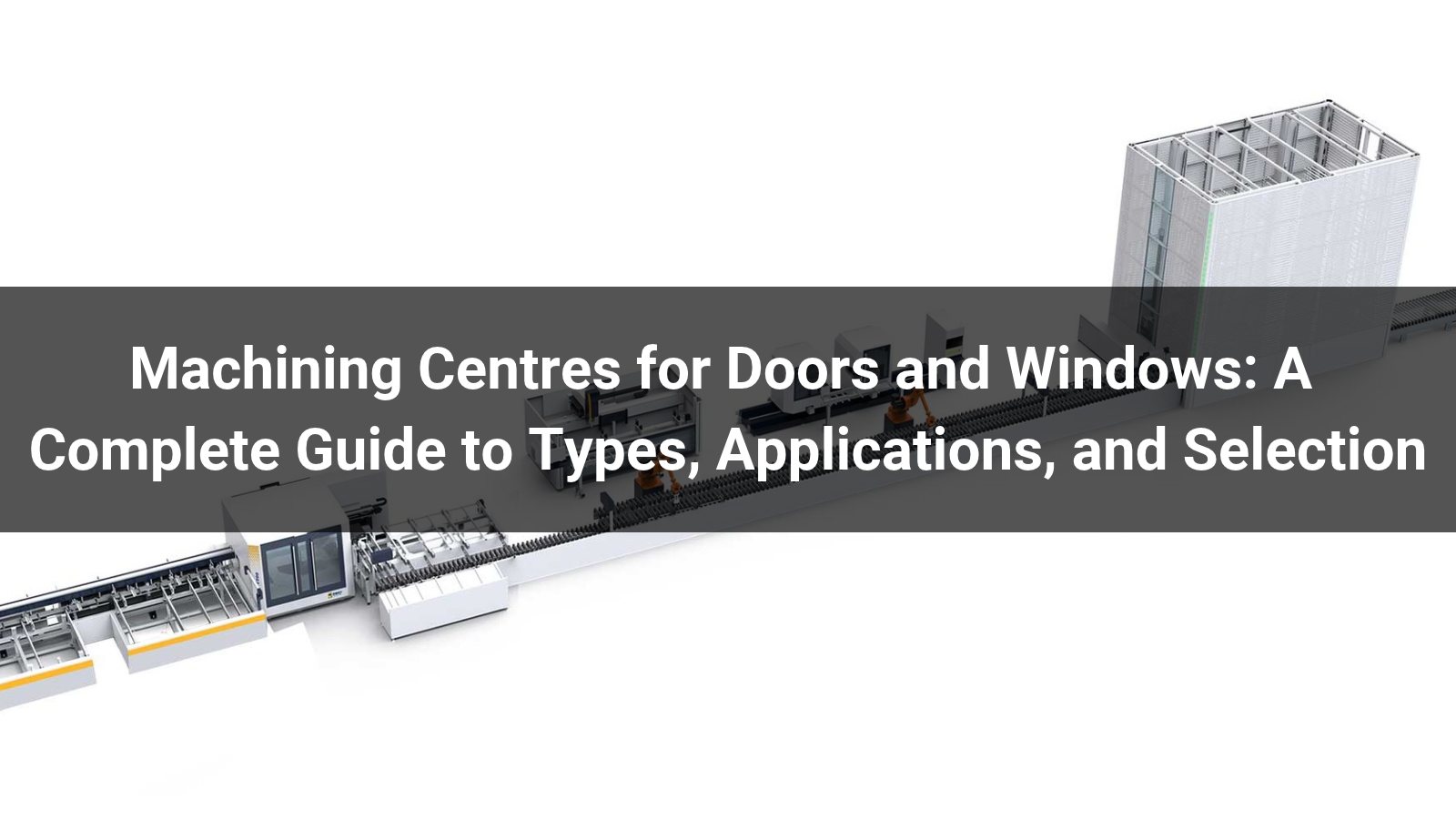
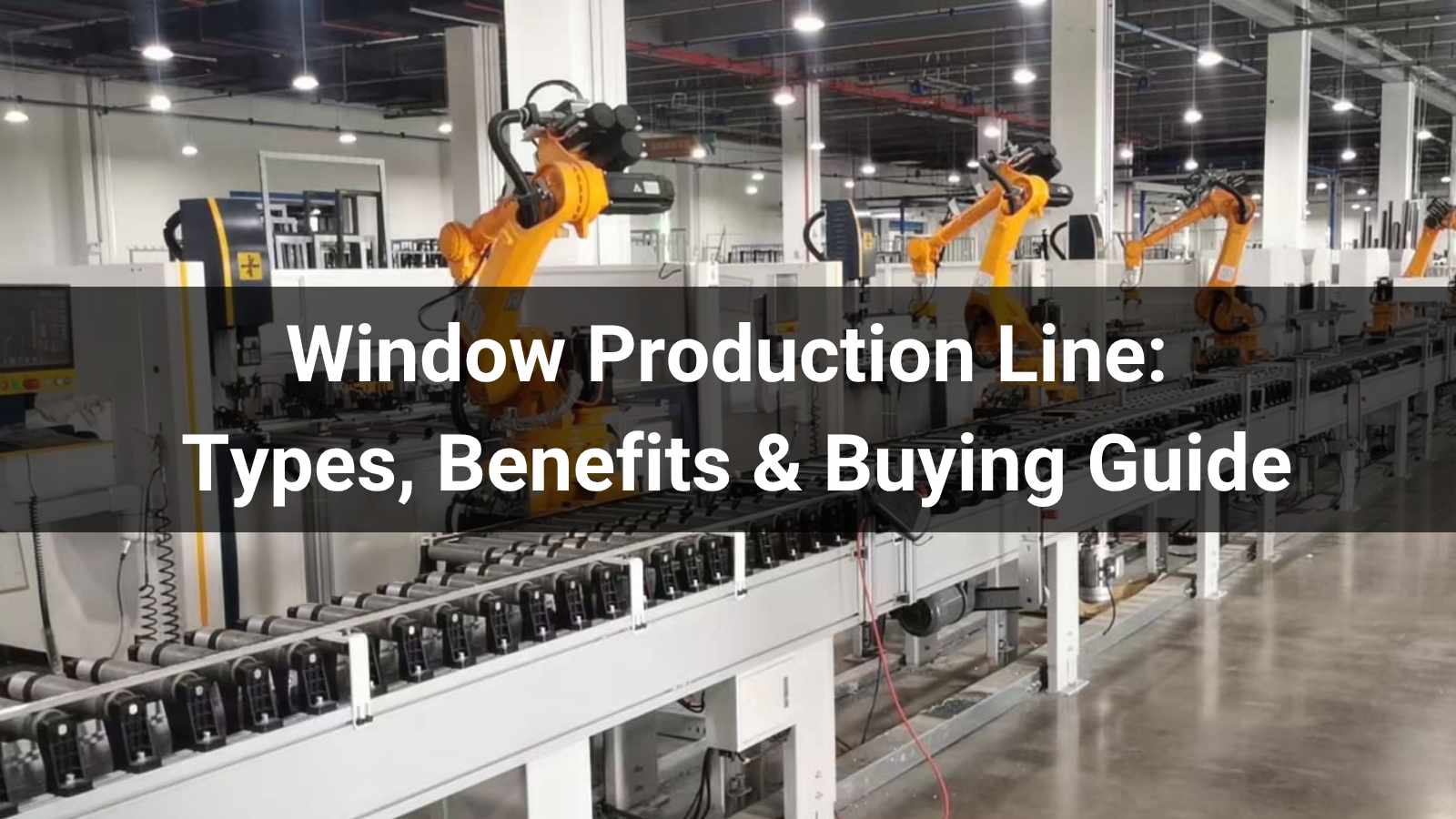
9.5 Integrated Aluminum Window and Door Production Lines
An integrated production line can coordinate multiple stages of aluminum window and door manufacturing. Depending on the line configuration, these stages may include profile processing, cutting, machining, and other operations required by the factory's production method.
LEADCNC provides aluminum window and door production-line solutions in addition to individual machining centres. Its product range includes the SU600, SU200, and SU100 Fully Intelligent Aluminum Windows & Doors Production Lines, as well as S100 and S200 intelligent production-line options.
The appropriate line depends on the factory's product range, output requirements, available space, and existing equipment. Buyers should discuss the complete workflow with the supplier rather than selecting a production line based on a model name alone.
Explore the LEADCNC aluminum window and door machinery range to review its individual machines and production-line options.
_1794969702_WNo_1600d900.webp)
10. How to Compare Different Machining Centres
When comparing machining centres for doors and windows, buyers should evaluate the complete machine configuration rather than focusing on one specification. Two machines with the same axis count may have different working ranges, spindle arrangements, tooling capacities, and software functions.
10.1 Axis Configuration and Machining Access
First, identify the number of profile surfaces and machining angles required by your products. A 3-axis machine may handle straightforward operations, while a 4-axis or 5-axis machine may be more suitable for additional machining directions.
10.2 Working Range and Profile Dimensions
Check the maximum profile length, width, height, and workpiece weight supported by the machine. Also consider the actual usable machining area, clamp positions, and tool access. A machine's nominal working length does not necessarily mean every profile can be machined at every position.
10.3 Spindle Performance and Tooling
Compare spindle power, speed range, tool interface, and the types of cutters supported. The spindle should be suitable for the materials and machining operations in your production process. Tool magazine capacity should also match the number of tools required for typical jobs.
10.4 Positioning and Machining Accuracy
Review the manufacturer's stated positioning and machining accuracy, but also consider the conditions under which those figures are measured. Workpiece clamping, tool condition, machine calibration, profile quality, and operating procedures all influence the final result.
10.5 Software and Compatibility
Confirm that the machine can work with the drawings, file formats, and production data used by your engineering team. A machine that requires an incompatible programming workflow may create additional work even if its mechanical specifications appear suitable.
10.6 Automation and Operator Requirements
Compare the loading method, tool changing, clamping arrangement, program management, and other automation functions. Also ask how much operator involvement is required for setup, tool replacement, cleaning, and routine production.
10.7 After-Sales Service and Spare Parts
A CNC machining centre is a long-term production investment. Buyers should understand the supplier's installation support, operator training, troubleshooting process, spare-parts availability, and technical response arrangements before placing an order.
| Comparison Factor | Questions to Ask | Why It Matters |
|---|---|---|
| Axis configuration | Does the machine reach all required machining surfaces and angles? | Determines whether the machine can perform the required operations. |
| Working range | Can it accommodate the longest and largest profiles? | Prevents workpiece-size limitations. |
| Spindle | Are power, speed, and tool interface suitable? | Affects cutting capability and tool compatibility. |
| Tooling | How many tools can be stored and changed automatically? | Influences multi-operation machining and setup time. |
| Clamping | Can the clamps secure the actual profile shapes? | Supports workpiece stability and machining consistency. |
| Software | Can the machine use the factory's drawings and programs? | Reduces programming and integration difficulties. |
| Service | What installation, training, and spare-parts support is available? | Supports long-term operation and maintenance. |
11. How to Choose the Right Machining Centre for Doors and Windows
Selecting the right machining centre starts with a clear understanding of the profiles and machining operations in your factory. A machine that performs well for one manufacturer may not be suitable for another because their profile dimensions, hardware systems, product mix, and output requirements are different.
11.1 Identify Your Main Profile Materials
Determine whether the machine will process aluminum profiles only or whether other materials are also involved. Check the material specifications, profile wall thickness, cross-section, and machining characteristics. The machine, spindle, tooling, and cutting conditions should be appropriate for the intended material.
11.2 Prepare Profile Drawings and Machining Samples
Collect representative drawings of the profiles you manufacture. Include cross-sectional dimensions, overall lengths, hole positions, slot dimensions, hardware openings, and other machining details.
If possible, prepare physical profile samples or example workpieces. These allow the supplier to assess clamping, tool access, machining direction, and whether the proposed machine configuration can perform the required operations.
11.3 List All Required Machining Operations
Make a list of the operations performed on each typical profile. Separate routine drilling and milling tasks from complex multi-face machining. This helps determine whether a 3-axis, 4-axis, or 5-axis configuration is necessary.
11.4 Estimate Production Volume
Estimate the number of profiles processed per shift or per day. Consider the number of product types, average machining time, loading and unloading time, tool changes, and setup requirements.
Production volume should be evaluated together with product variety. A factory producing large quantities of a small number of standard profiles may have different equipment needs from a factory handling many customized orders.
11.5 Confirm the Required Working Range
Use your longest and largest workpieces to evaluate the machine's working range. Check profile support, clamp spacing, machining access, and whether the machine can handle the required dimensions without additional manual repositioning.
11.6 Choose the Appropriate Axis Configuration
Match the axis configuration to the machining operations:
- Choose 3-axis equipment when most operations can be completed from the accessible machining direction.
- Consider 4-axis equipment when profiles require additional machining angles or multiple-face access.
- Evaluate 5-axis equipment when complex geometries and machining directions require greater positioning flexibility.
11.7 Check Spindle, Tool Magazine, and Clamping
Confirm that the spindle and available tools can perform the required operations. Check the tool magazine capacity, automatic tool-changing method, and whether the clamping system can securely hold your profiles throughout the machining process.
11.8 Evaluate Software and Production Integration
Ask the supplier to explain how machining programs are created, transferred, and managed. If the machine will be connected to an existing production line, confirm the required communication interfaces, material flow, and coordination with upstream and downstream equipment.
11.9 Review Installation Conditions
Measure the available factory space and check the machine's overall dimensions, access requirements, power supply, air supply, foundation conditions, and other installation requirements. Consider space for profile loading, finished workpieces, tool storage, and maintenance access.
11.10 Request a Sample Machining Test
Where possible, ask the supplier to process a representative profile using your drawings and machining requirements. A sample test can help evaluate machining access, feature quality, program suitability, and the practical workflow before purchase.
| Selection Step | Information to Prepare | Expected Outcome |
|---|---|---|
| Material assessment | Material type, profile structure, and wall thickness. | Confirms basic machine and tooling suitability. |
| Drawing review | Profile drawings, dimensions, and machining positions. | Defines the required working range and machining access. |
| Operation analysis | Drilling, milling, slotting, end machining, and other tasks. | Helps determine the required axis configuration. |
| Production planning | Daily output, product variety, and shift arrangements. | Supports capacity and automation decisions. |
| Technical comparison | Spindle, tooling, clamps, software, and accuracy data. | Identifies the most suitable machine configuration. |
| Factory assessment | Floor space, power, air supply, and installation conditions. | Checks installation feasibility. |
| Sample test | Representative profile and machining program. | Provides practical evidence of machining suitability. |
LEADCNC offers individual aluminum profile machining centres and integrated window and door production-line solutions. Visit the LEADCNC window-making machine category to review the available equipment and discuss which configuration matches your manufacturing requirements.
12. Maintenance and Operating Considerations
Regular maintenance helps keep a CNC machining centre in suitable operating condition and reduces the risk of avoidable production interruptions. Maintenance tasks and intervals should follow the machine manufacturer's instructions and the actual operating environment.
12.1 Clean the Working Area
Aluminum chips and machining debris can accumulate around the worktable, clamps, tool area, and chip collection system. Clean the machine according to the manufacturer's procedures and avoid allowing debris to interfere with moving components or workpiece positioning.
12.2 Inspect the Spindle and Tooling
Check cutting tools for wear, damage, and unsuitable cutting edges. Inspect the spindle and tool interface according to the recommended maintenance schedule. Worn tools may affect machining quality and increase cutting loads.
12.3 Check Clamps and Workpiece Positioning
Inspect the clamping system for proper operation and secure profile holding. Check for loose components, damaged contact surfaces, and positioning problems. Incorrect clamping can lead to inaccurate machining or workpiece movement.
12.4 Maintain the Axis Drive System
Keep the guideways, transmission components, and other moving assemblies in accordance with the manufacturer's lubrication and inspection requirements. Abnormal noise, vibration, or movement should be investigated by qualified maintenance personnel.
12.5 Check the CNC Controller and Electrical System
Keep the control cabinet and electrical components clean and inspect them according to the manufacturer's instructions. Back up important machining programs and configuration data using the recommended procedure.
12.6 Maintain Cooling and Lubrication Systems
Check the condition and operating status of the cooling, lubrication, and chip-management systems. Use the specified fluids and follow the recommended replacement or cleaning intervals.
12.7 Train Machine Operators
Operators should understand the machine's operating procedures, program selection, workpiece clamping, tool management, and basic fault indications. Proper training helps reduce setup mistakes and supports consistent production.
12.8 Keep Maintenance Records
Record inspections, tool replacements, machine adjustments, service work, and any recurring faults. These records help identify maintenance patterns and provide useful information when contacting the supplier for technical support.
13. FAQs About Machining Centres for Doors and Windows
13.1 What is a machining centre for doors and windows?
A machining centre for doors and windows is a CNC machine used to process profiles and components for window and door manufacturing. Depending on its configuration, it can perform drilling, milling, slotting, end machining, and other programmed operations on aluminum profiles.
13.2 What materials can door and window machining centres process?
Many machines in this category are designed for aluminum profiles and certain light-alloy materials. The actual material range depends on the machine structure, spindle, tooling, clamping system, and manufacturer's specifications. Buyers should confirm material compatibility before ordering.
13.3 What is the difference between 3-axis and 4-axis CNC machining centres?
A 3-axis machine uses three linear axes for machining movements. A 4-axis machine adds a rotary or positioning axis, allowing the machine to access additional surfaces or angles. The appropriate choice depends on the profile geometry and required machining operations.
13.4 When should I choose a 5-axis machining centre?
A 5-axis machining centre may be suitable when profiles or components require complex angles, multiple machining directions, or more advanced access to different surfaces. For standard drilling and milling tasks, a 3-axis or 4-axis machine may already be sufficient.
13.5 Can a CNC machining centre drill and mill aluminum window profiles?
Yes. Many aluminum profile machining centres are designed to perform drilling and milling operations. The exact functions depend on the spindle, axis configuration, tooling, and software. Buyers should provide their profile drawings and machining requirements to confirm suitability.
13.6 Can one machining centre process different aluminum profile sizes?
A machining centre can process different profile sizes when they fall within its supported working range and can be secured by the available clamping system. Confirm the maximum profile dimensions, workpiece weight, machining access, and clamp adjustment range.
13.7 What is the function of an automatic tool changer?
An automatic tool changer selects and replaces cutting tools according to the machining program. It can reduce manual tool changes and allow different drilling or milling operations to be completed in a coordinated machining cycle. The available tool capacity depends on the machine model.
13.8 Is a 4-axis machining centre suitable for aluminum door production?
A 4-axis machine can be suitable for aluminum door production when the required operations involve additional machining angles or multiple profile surfaces. Its suitability depends on the door profile dimensions, hardware features, machining program, and machine working range.
13.9 What should I provide when requesting a machining centre quotation?
Prepare profile drawings, material information, maximum profile dimensions, required machining operations, expected production volume, and preferred automation level. Photos or physical samples can also help the supplier evaluate clamping and machining access.
13.10 Can a machining centre be integrated into an aluminum window and door production line?
Yes. Depending on its design and available interfaces, a machining centre can be used as part of a broader production workflow. Buyers should confirm material-handling arrangements, program communication, equipment compatibility, and the sequence of upstream and downstream operations.
13.11 What is the difference between a standalone machining centre and an automated production line?
A standalone machining centre performs machining as an individual workstation, with operators generally responsible for loading and unloading profiles. An automated production line coordinates multiple processing or handling stages to support a more integrated workflow. The right solution depends on factory capacity, product variety, and investment plans.
13.12 How do I maintain a CNC machining centre for doors and windows?
Follow the manufacturer's maintenance schedule. Typical tasks include cleaning chips, inspecting cutting tools, checking clamps, maintaining moving components, monitoring lubrication and cooling systems, and backing up CNC programs. Specialized maintenance should be performed by trained personnel.
13.13 Where can I buy machining centres for doors and windows?
Buyers can source equipment from specialized CNC machinery manufacturers and suppliers of aluminum window and door production equipment. Before ordering, compare the machine's working range, axis configuration, spindle, tooling, software, technical support, and suitability for your profile drawings. LEADCNC provides aluminum window and door machining equipment and production-line solutions through its window-making machine product category.
14. Conclusion
Machining centres for doors and windows help manufacturers process aluminum profiles with controlled positioning and repeatable machining operations. Depending on the machine configuration, they can perform drilling, milling, slotting, drainage-hole processing, lock-hole machining, and other profile-processing tasks. The choice between 3-axis, 4-axis, and 5-axis equipment depends on the required machining directions, profile geometry, and production workflow.
For manufacturers planning to purchase a CNC machining centre, the most important step is to match the machine's capabilities with actual production requirements. Profile dimensions, material, machining operations, spindle specifications, tooling, clamping, software compatibility, automation, and after-sales support should all be evaluated before making a decision. Preparing profile drawings and representative samples can make supplier discussions more accurate and efficient.
LEADCNC provides CNC machinery for aluminum door and window production, including the Emerald F260 4-Axis CNC Machining Center and Emerald T300 3-Axis CNC Machining Center. Its product range also includes intelligent aluminum window and door production-line solutions such as the SU600, SU200, and SU100 series, as well as S100 and S200 options.
Visit LEADCNC or explore its aluminum window and door machinery range to review available equipment. If you are planning a new production line or upgrading existing machining equipment, prepare your profile drawings, machining requirements, and expected output before contacting the supplier.